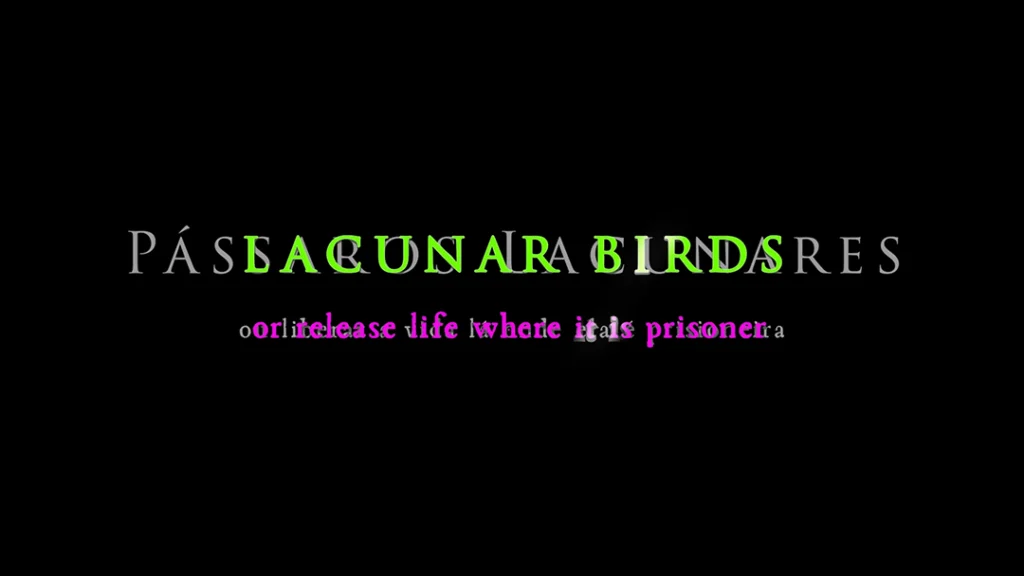
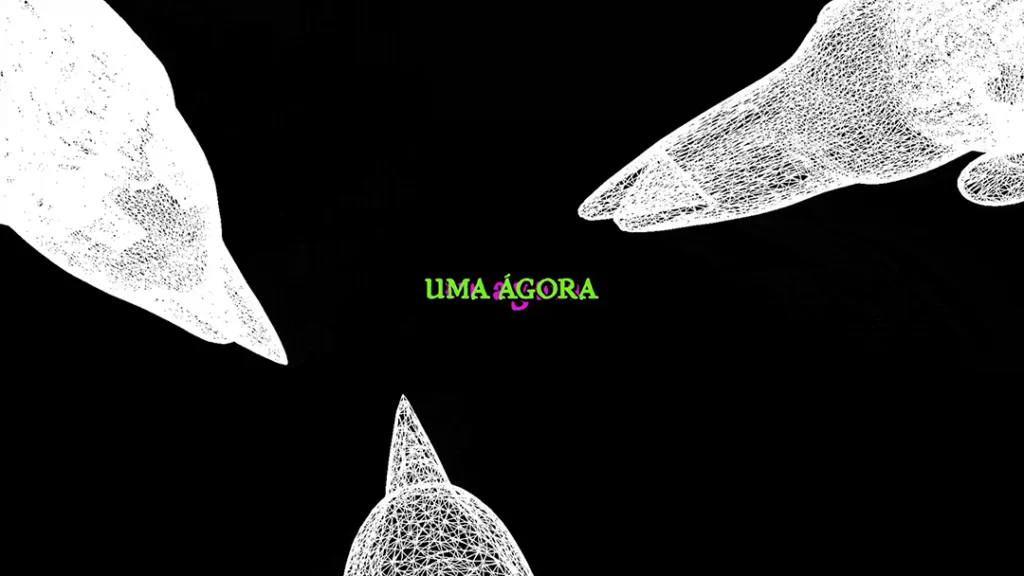
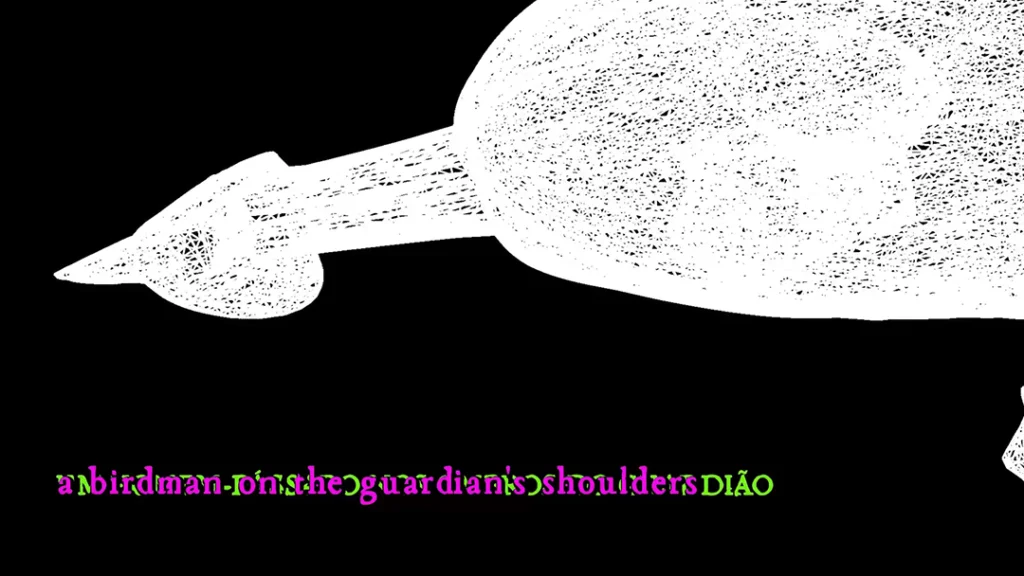
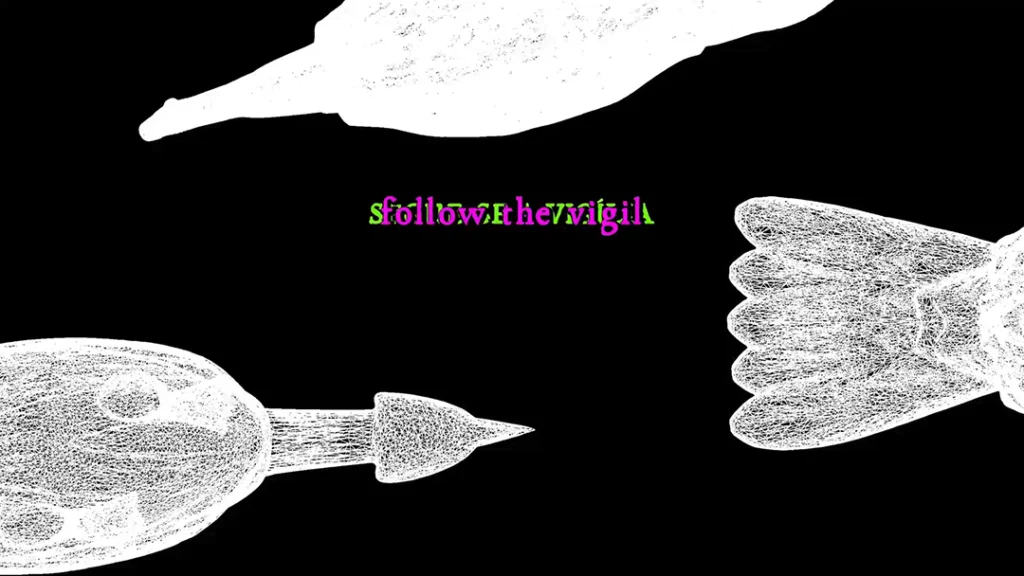
Bete Esteves' exhibition at the FLUP Library is the result of the friction between the artist's poetics and Isabel Pereira Leite's fabular writing, dated 2011. The author of the text, in turn, was inspired to write it by Armanda Passos' painting, installed on the wall at the Library's entrance, in which the nocturnal flight of birds, mysterious creatures, evokes the wind. The text deals with the movements of these beings that come to life when the Library darkens. Before the artist Bete Esteves found the title for the exhibition, folds upon folds occurred: fabulations of fabulations, flights of flights, gaps of gaps, legends of legends.
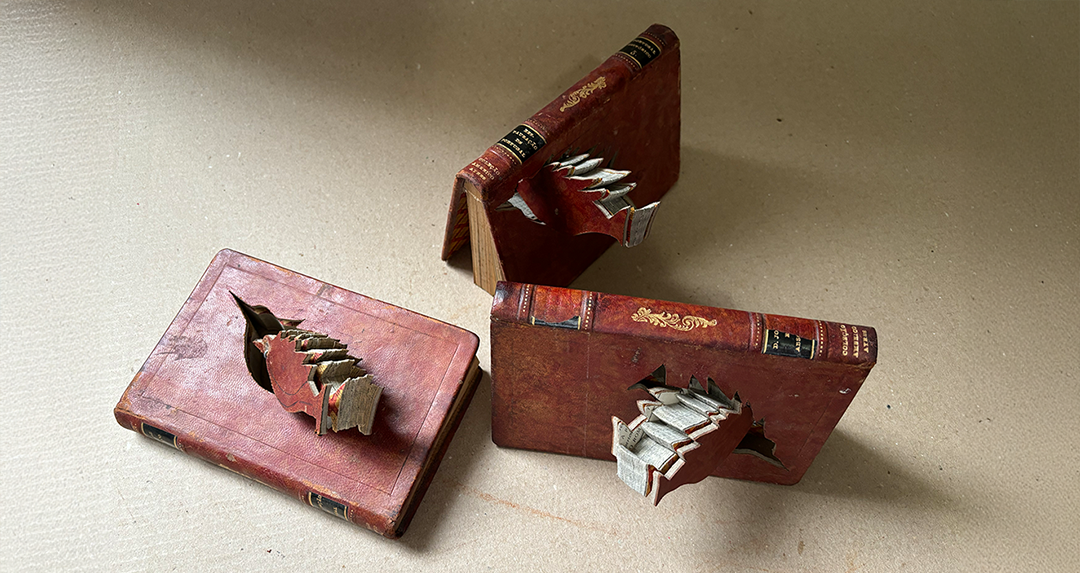
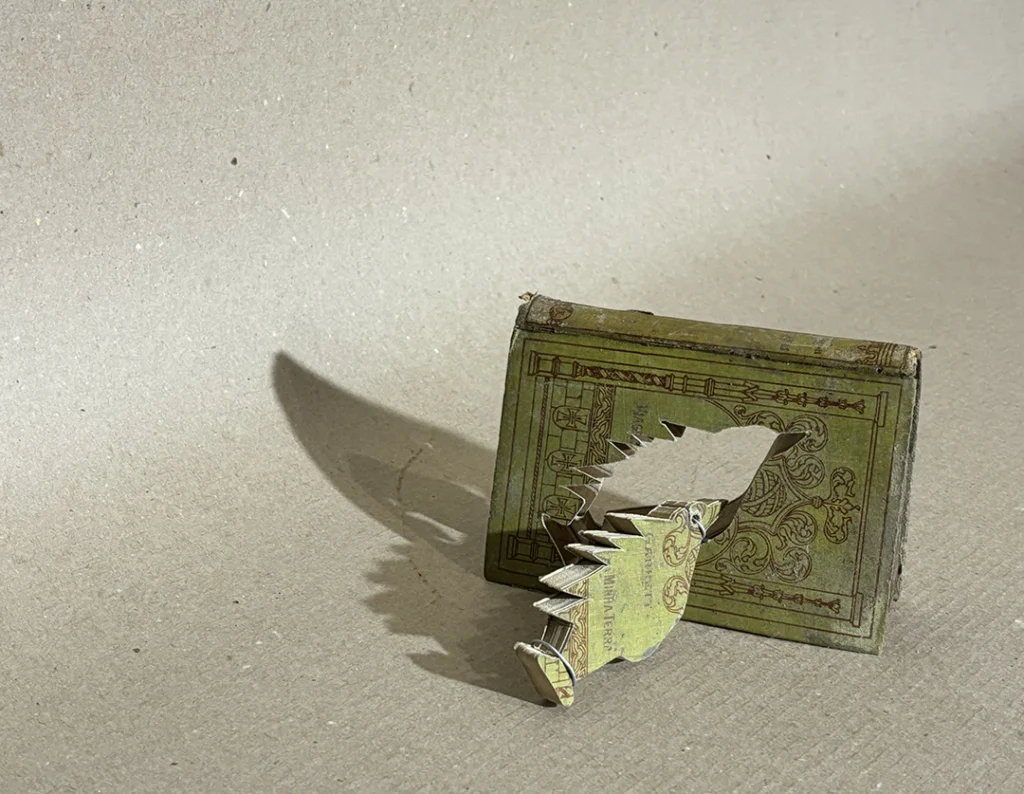
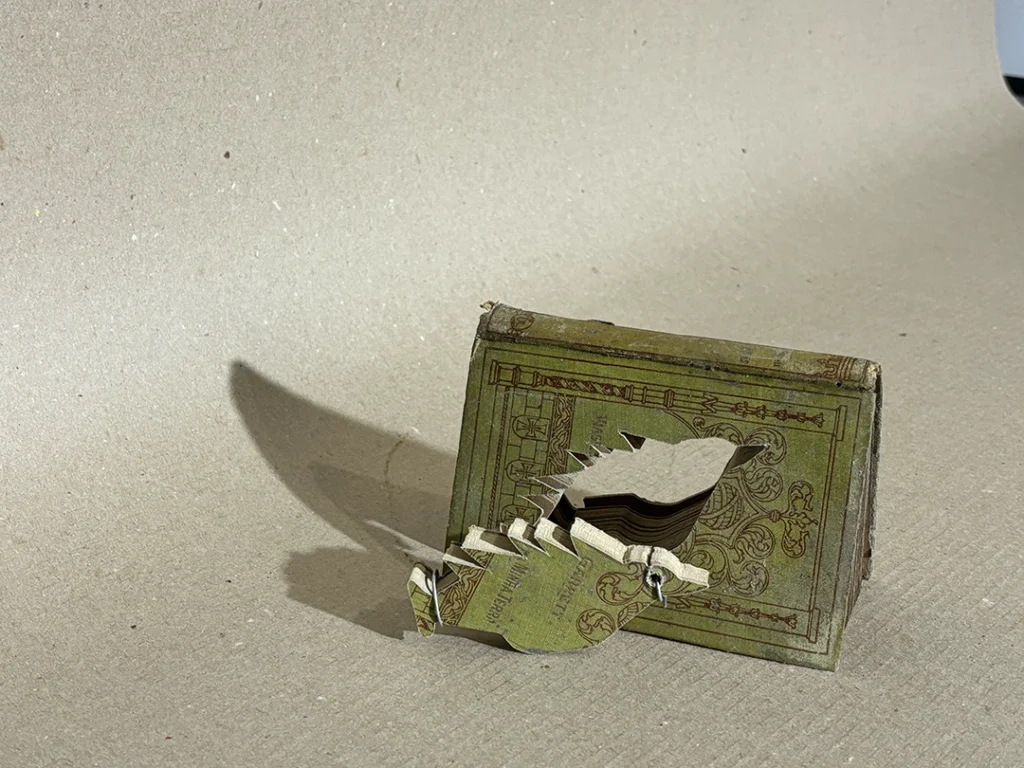
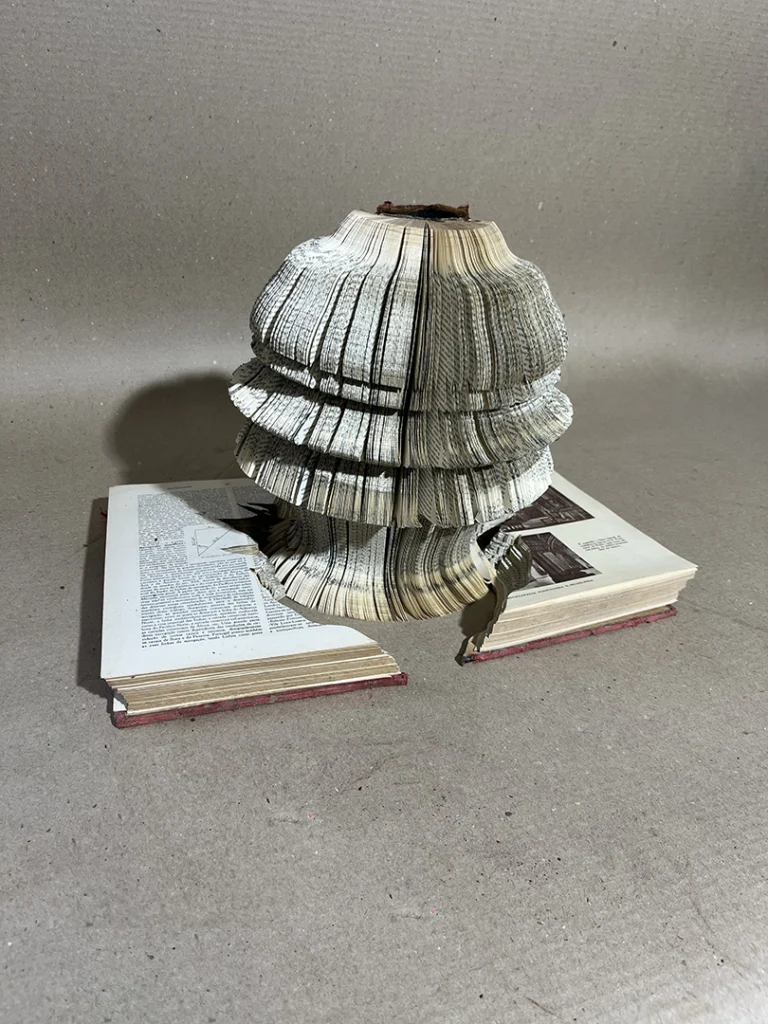
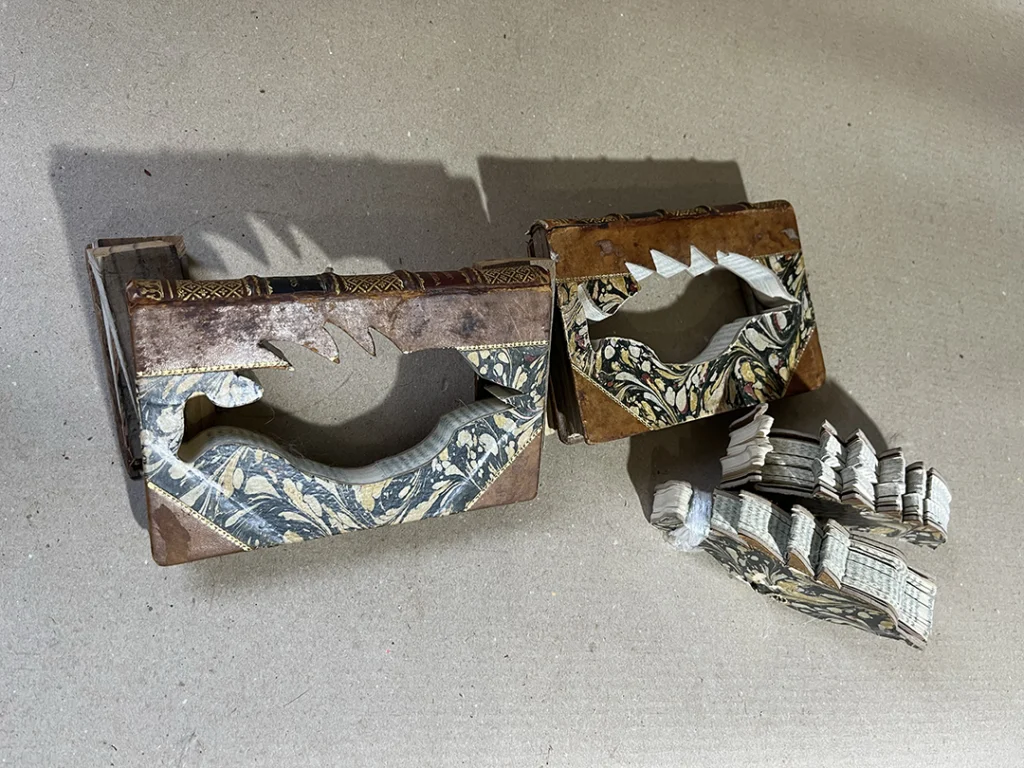
In the lounge area, which precedes the arrival at the building's main tower, an ambiance created by the artist places us in a modified, slow time, and the place becomes noticeably warm. A darkened and simultaneously incandescent landscape. It is in this setting that a certain drama unfolds and affects those who pass through. In the display cases, one sees a collection of books from a Portuguese-Brazilian Encyclopedia, sculpted by the curiosity of someone always on the lookout for something between pages and letters. In the artist's invention, the books become hybrid pieces of singular topology. Transformed by absences. By the discovery of other gaps never before revealed. From the books, the bodies of birds were extracted. The voids left by them lead us to a perception of multiple effects. The fissures revealed between the pages are configured as a detailed topographical study of the absent body when the book is presented open. The formation of rotated figures that invent bodies, worlds, and other legends.
According to the artist, "Books are simultaneously birds and nests. The place where they live and from where they depart." From them, creatures are released that gain life and freedom to fly over oceans, cross continents, explore every strait, bay, forest, mountain, hole represented in maps rescued from collections belonging to the library, and which come to life in the display cases of the house that holds them. Placed there, under the glass of the shop windows, the maps allow for a range of possible fabrications about the origins of these beings and their stories.
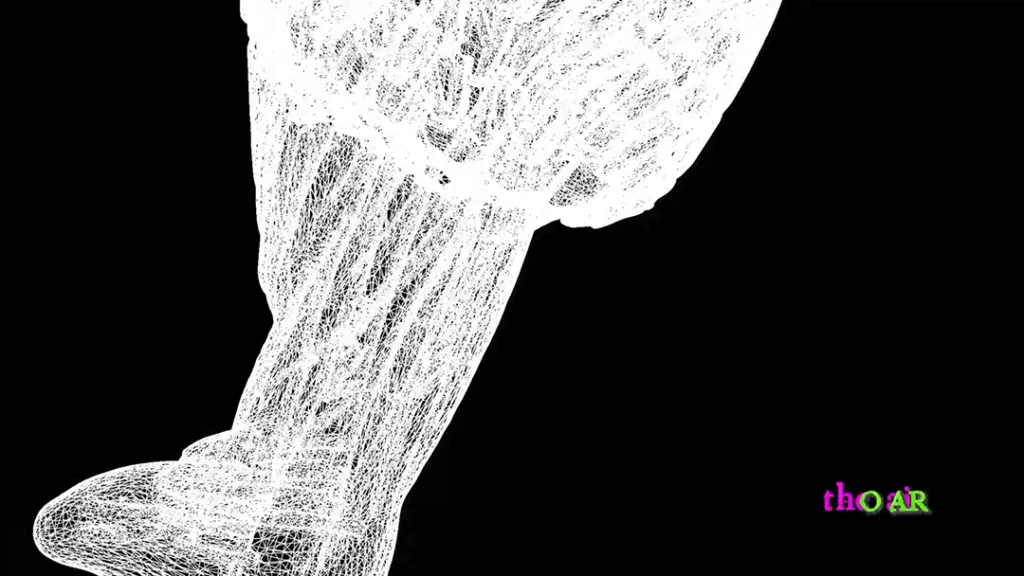
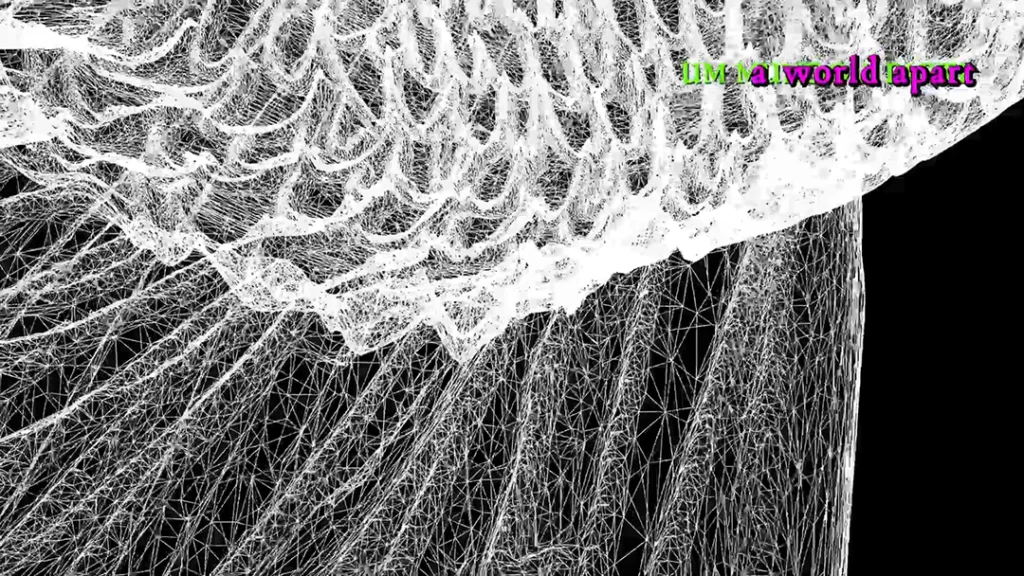
In low light, these works invite us to see them up close and observe them slowly. A vision that encompasses different scales, from miniatures to immensity. Bete Esteves offers us, in her poetic gesture, a crack in the everyday. A gap. A place of passage. Various stories that each observer can find or construct while entering the cracks and legends that the artist articulates by allowing us to enter the lacunar spaces she has created. Folds of fables, echoes of beating wings, silences like pauses, birdsong, sounds of oceans...