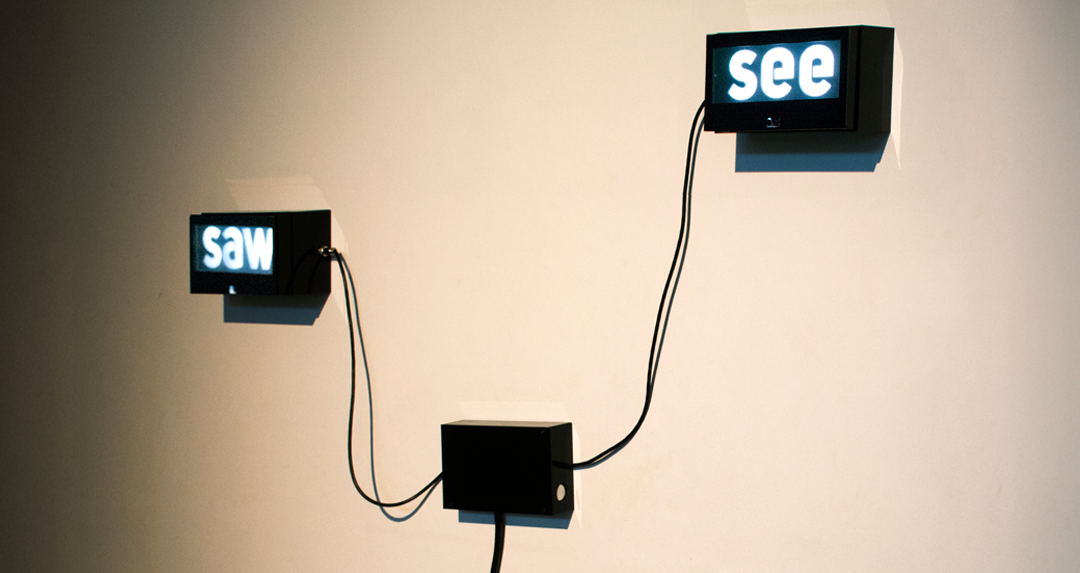
Seesaw combines afterimage and memory. Seesaw, an English word for seesaw, is a playground device, a type of balance regulated by the force of gravity, weight, and counterweight.
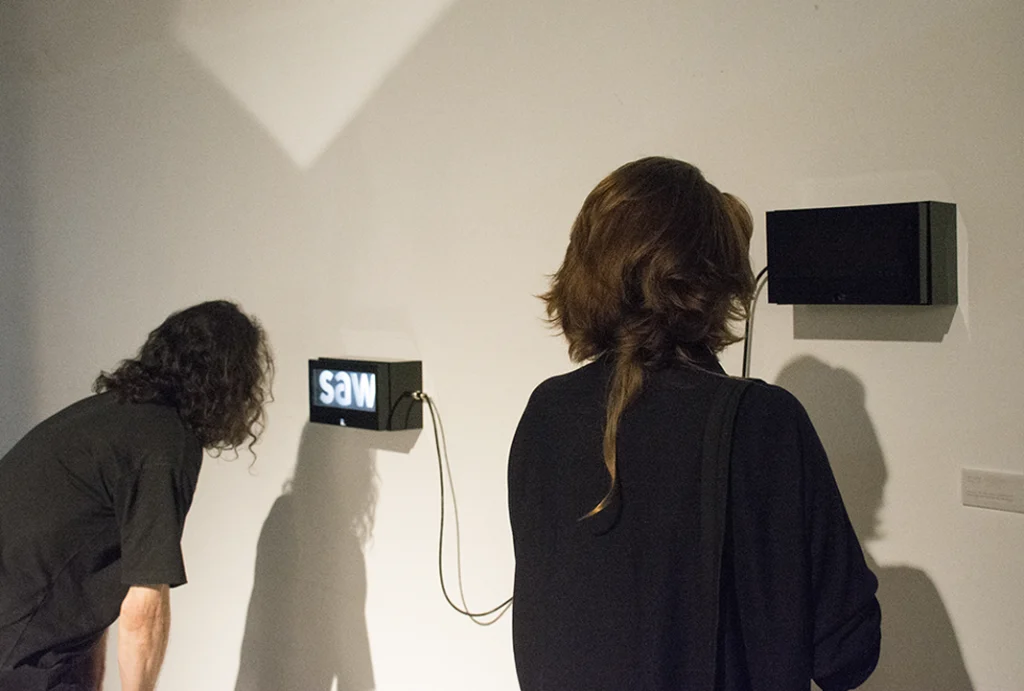
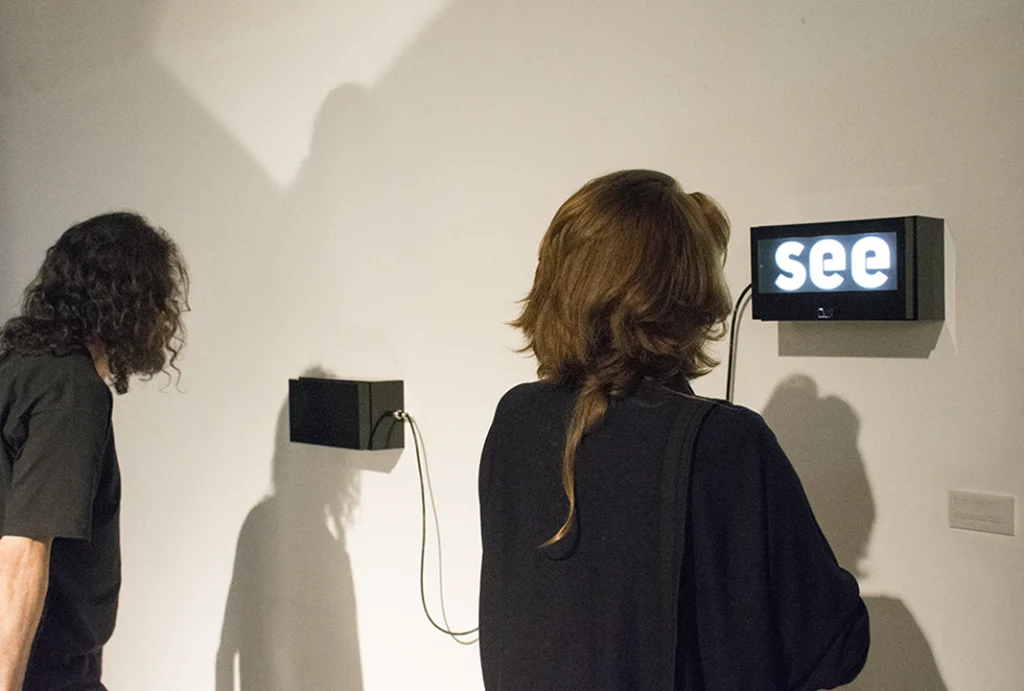
The installation features two monitors with fairly simple visual elements: the word SEE – present tense of the verb to see – and the word SAW – past tense of the verb to see – both composed of white letters on a black background.
The words only appear if two people are present in front of each monitor.
After three seconds of each of these words appearing on their respective monitors, a white screen follows, where for a few seconds we see the memory of the word that has just faded. We can perceive the continuation of the visual impression after the disappearance of the stimulus that caused the original image. That is, on one of the monitors we see the afterimage of SEE, darkened and already fading on a white background, and on the other monitor, positioned lower and diagonally, alternating with SEE, we see the word SAW, which will then also leave its afterimage on the white background. Fleeting memory, a trace of a recently passed time, and at the same time a gaze that bears witness to the present engendered from the past.