The poetic and investigative journey of the project, Who Knows What I'm Made Of, begun in March 2023, is driven by the Crafting program, focused on experimenting with artistic processes in dialogue with life and the notion of sensitive repair. All experimentation took place during residencies in Portugal at Trust Collective, Barril de Alva, and Espaço AND Lab in Lisbon, with close supervision by Fernanda Eugenio.
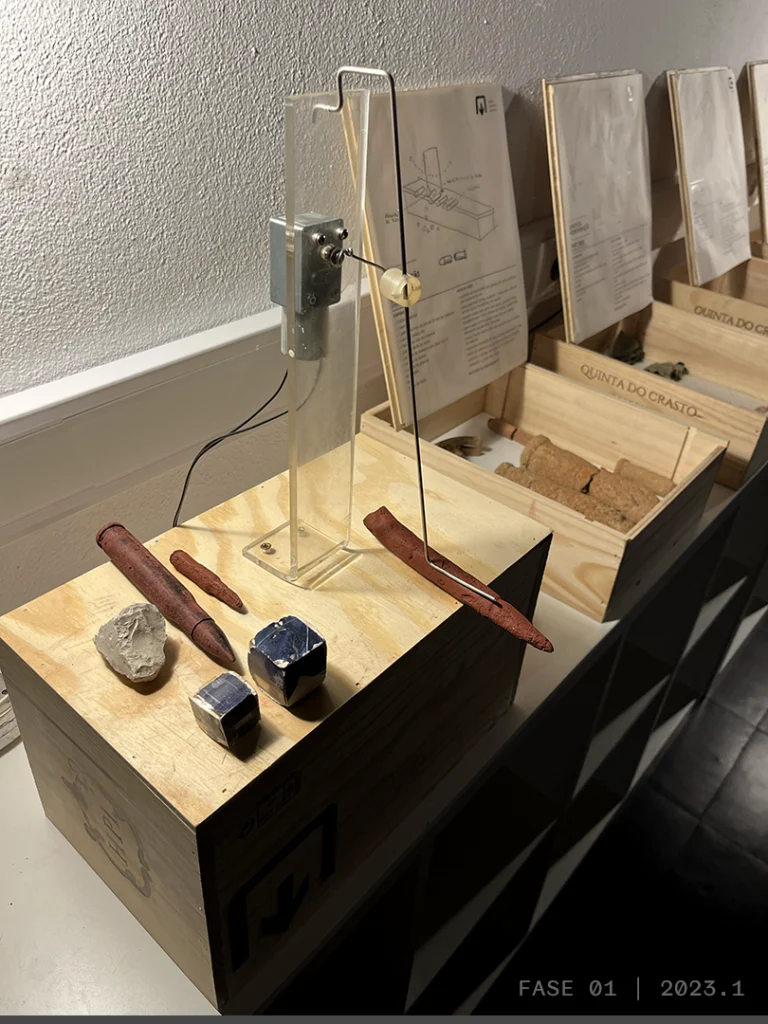
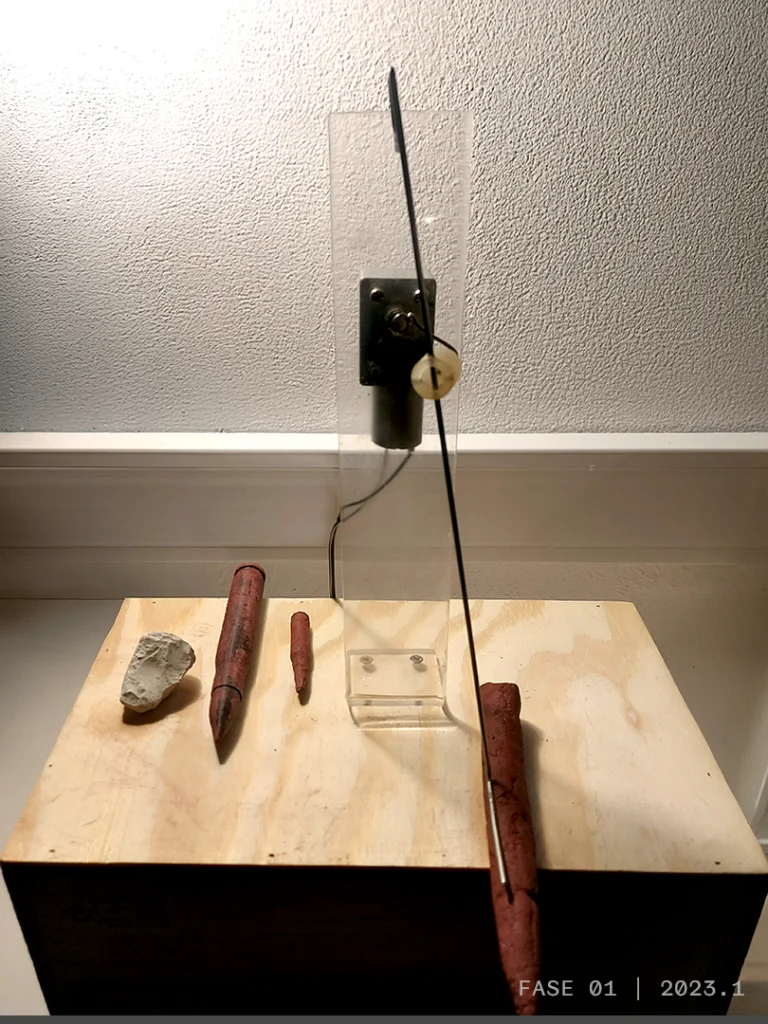
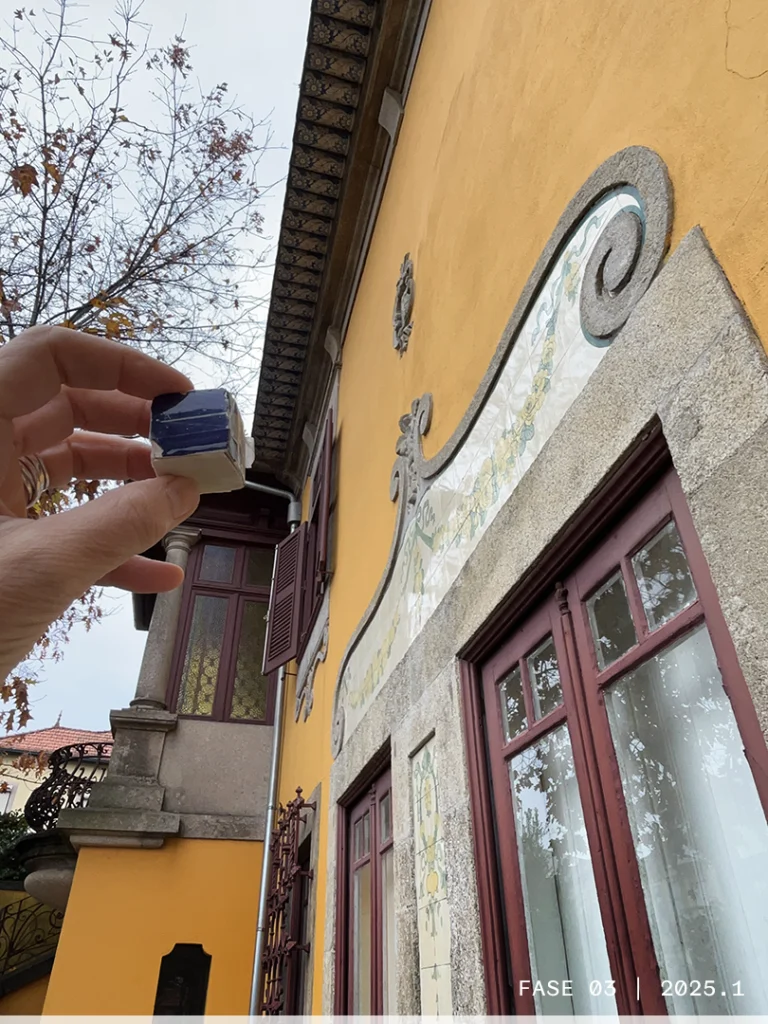
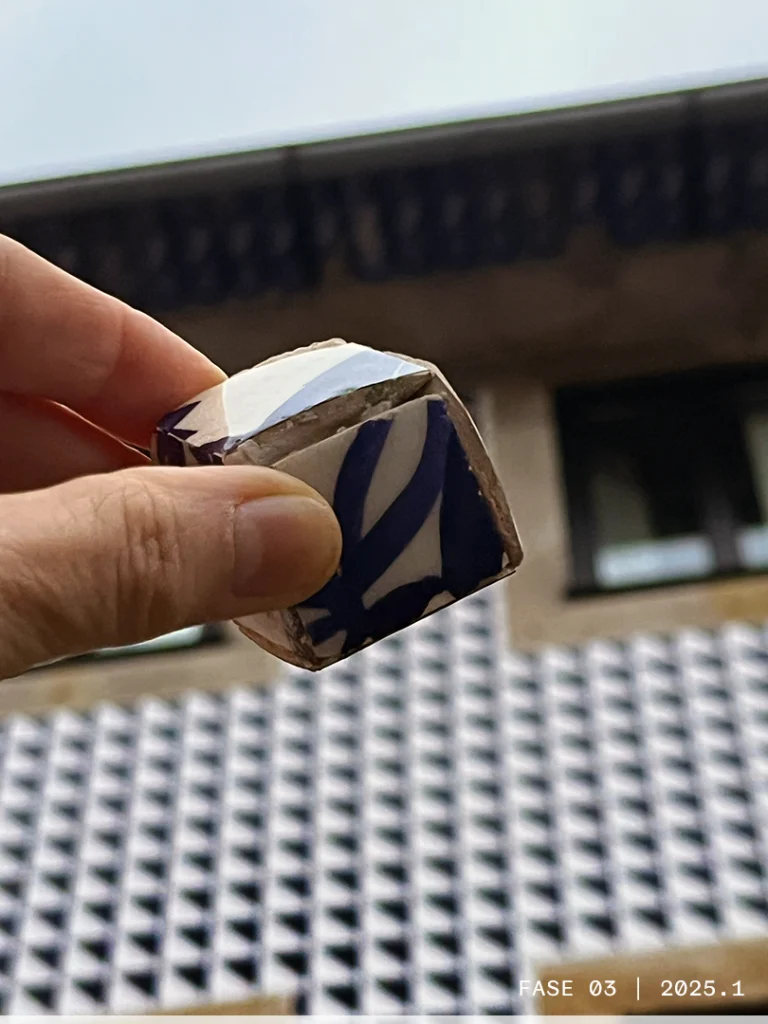
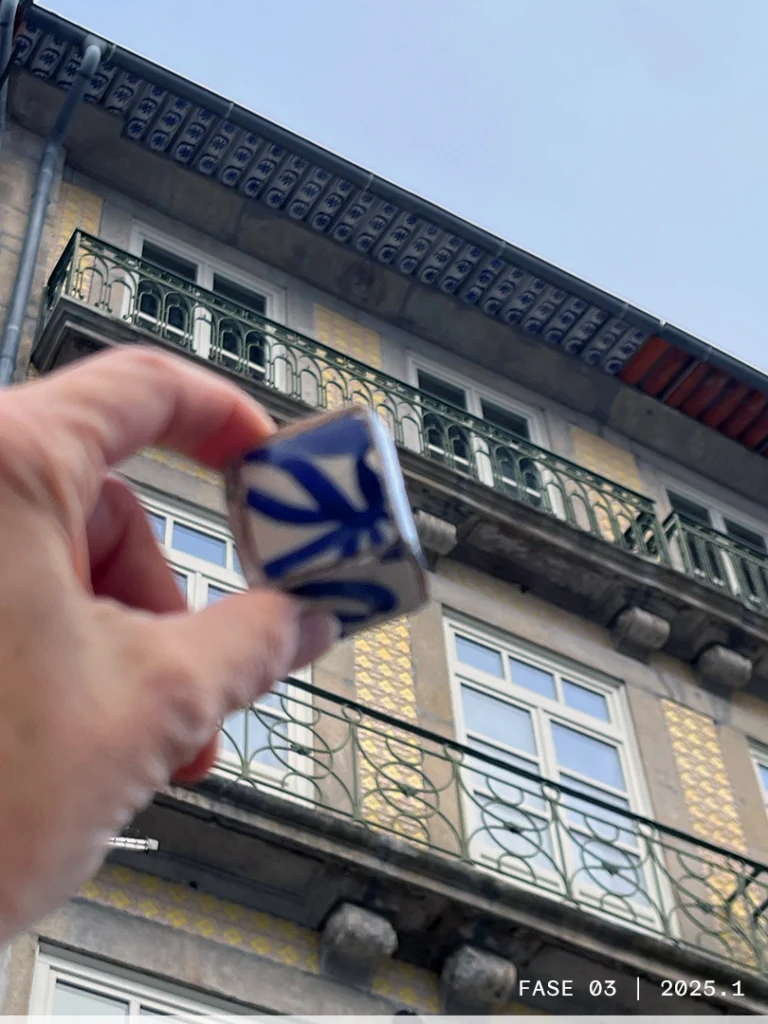
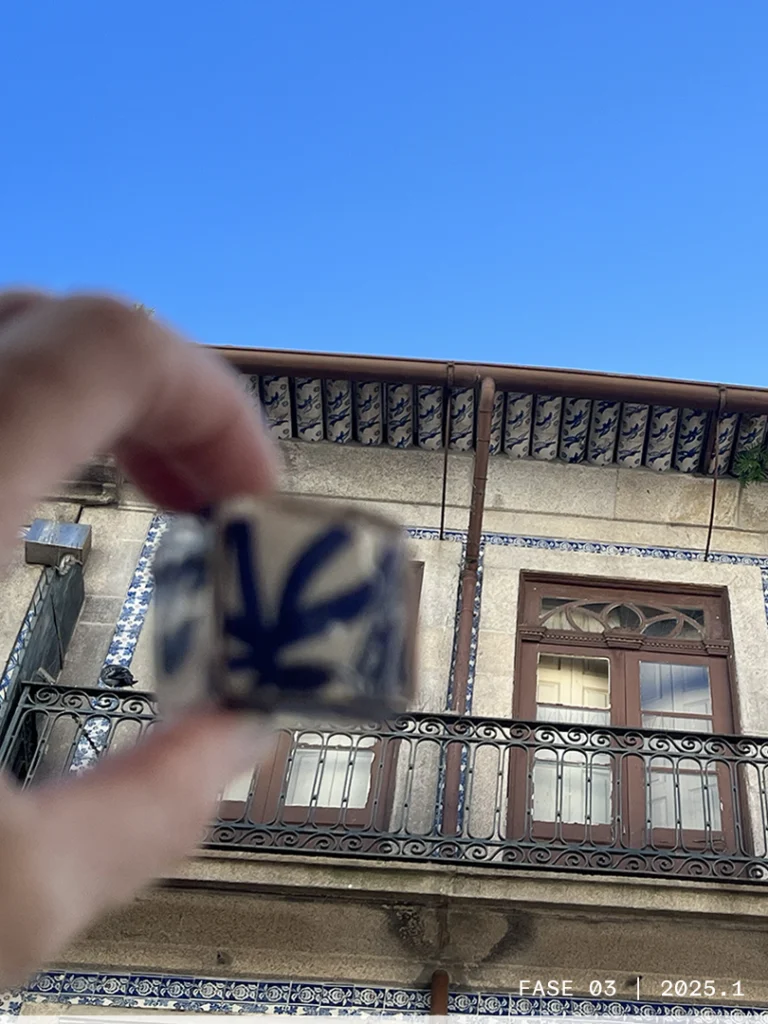
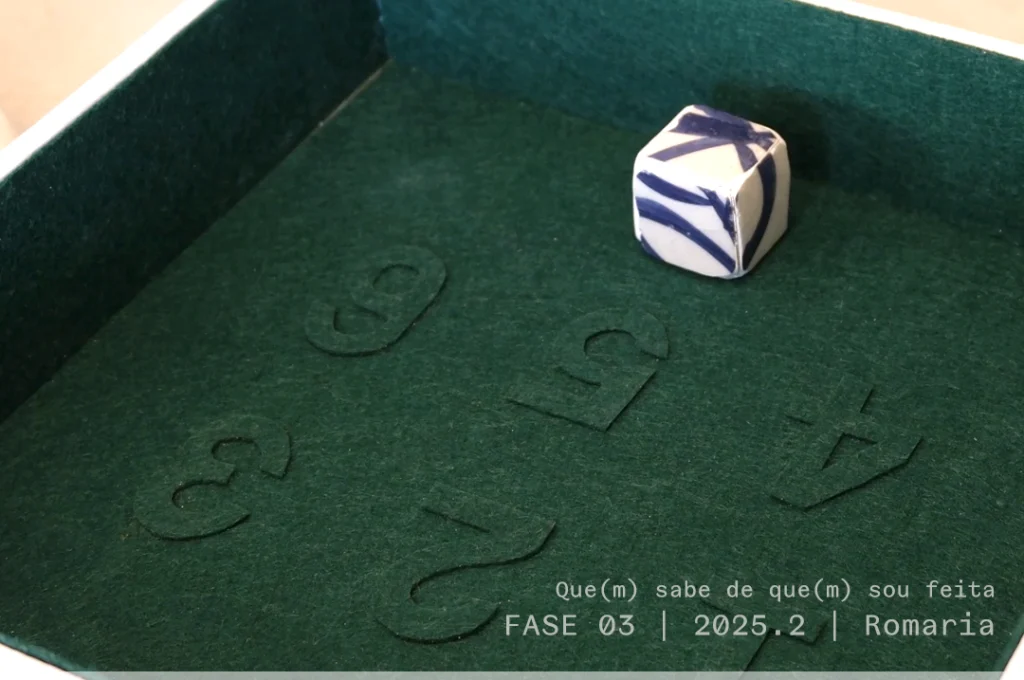
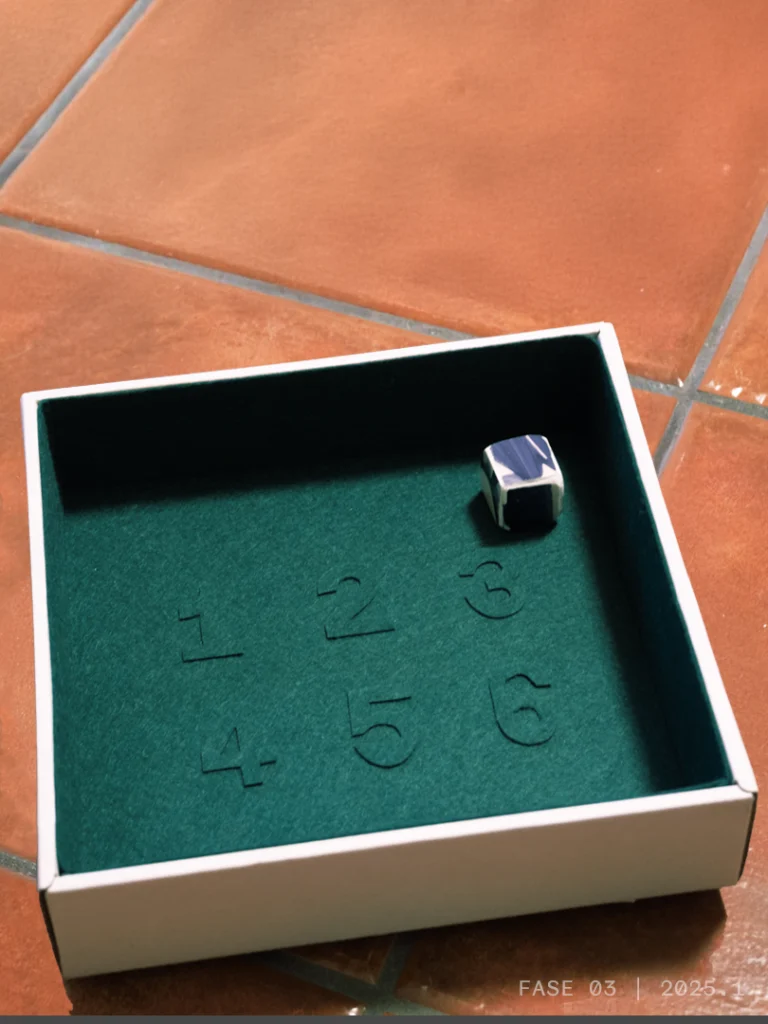
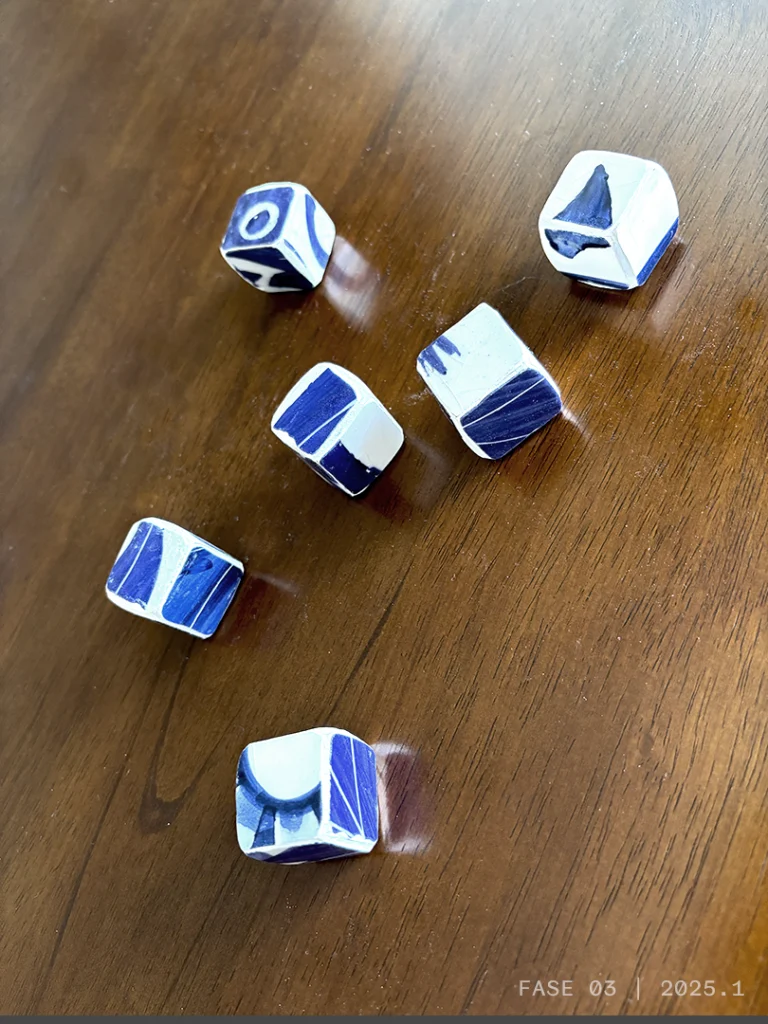
The work stems from a profoundly personal and symbolic experience: the artist's family home in Rio de Janeiro, of Portuguese origin, now abandoned. Marked by long-standing memories and affections, this house is a symbol of ancestry, a point of condensation of intense family stories. The old, handcrafted, decorated roof tiles covering the eaves began to break and fall, coinciding with a bodily experience of the artist: the wear and tear and chipping of teeth. This tactile coincidence was the starting point of the work. The scratches produced on her hands from handling the shards, the scratching of her tongue in the absence of tooth chips, the sound of the dentist's grinding motor, and the sounds produced by manipulating the earthenware shards themselves became the inflection point of a process of creation and healing. The artist recognizes in this parallelism a pattern of fragmentation, both material and emotional, that spanned generations. The ruin of the house mirrored a "collective lack of gaze," a neglect transmitted as a family inheritance. From there, Bete began a journey of remembrance, exploring how to repair, through art and the handling of matter, that which was broken in the realm of affections, language, and the body. From this act of reparation, the first objects were born – the first stage of the project: fragments of tile transformed into projectiles, into dice, into pieces that materialize chance, play, and destiny.
| PHASE 1 | TRAPS
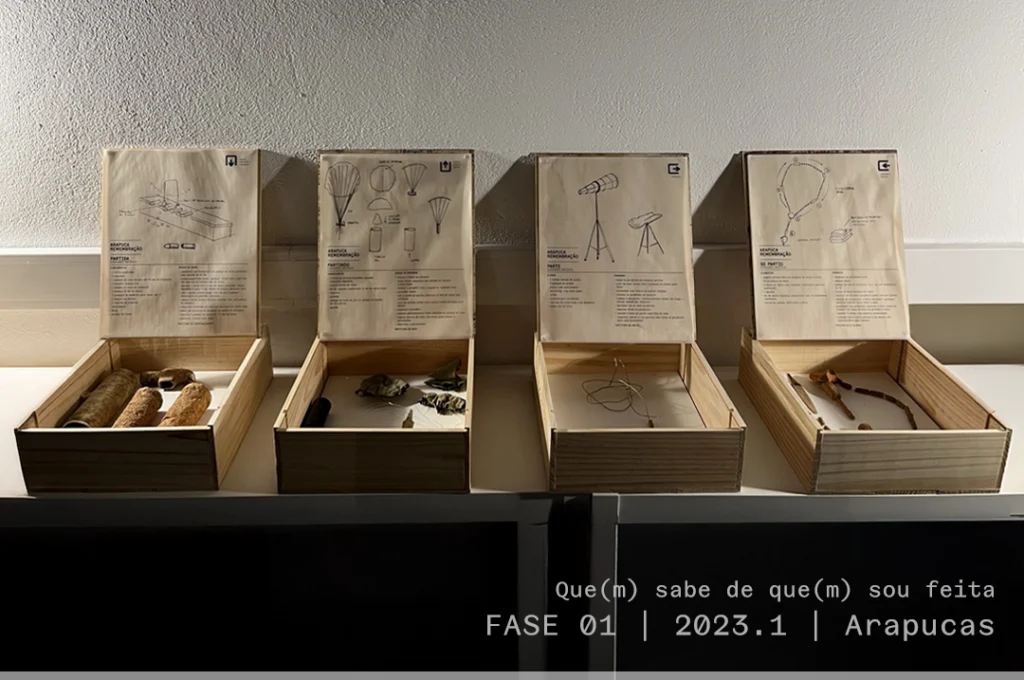
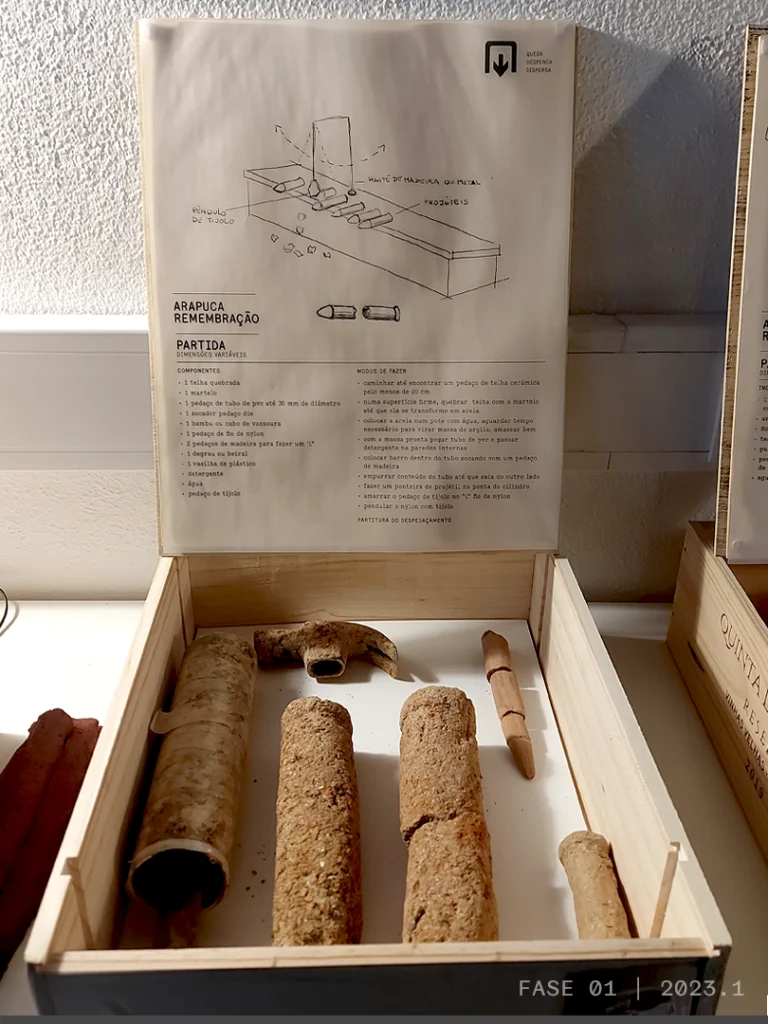
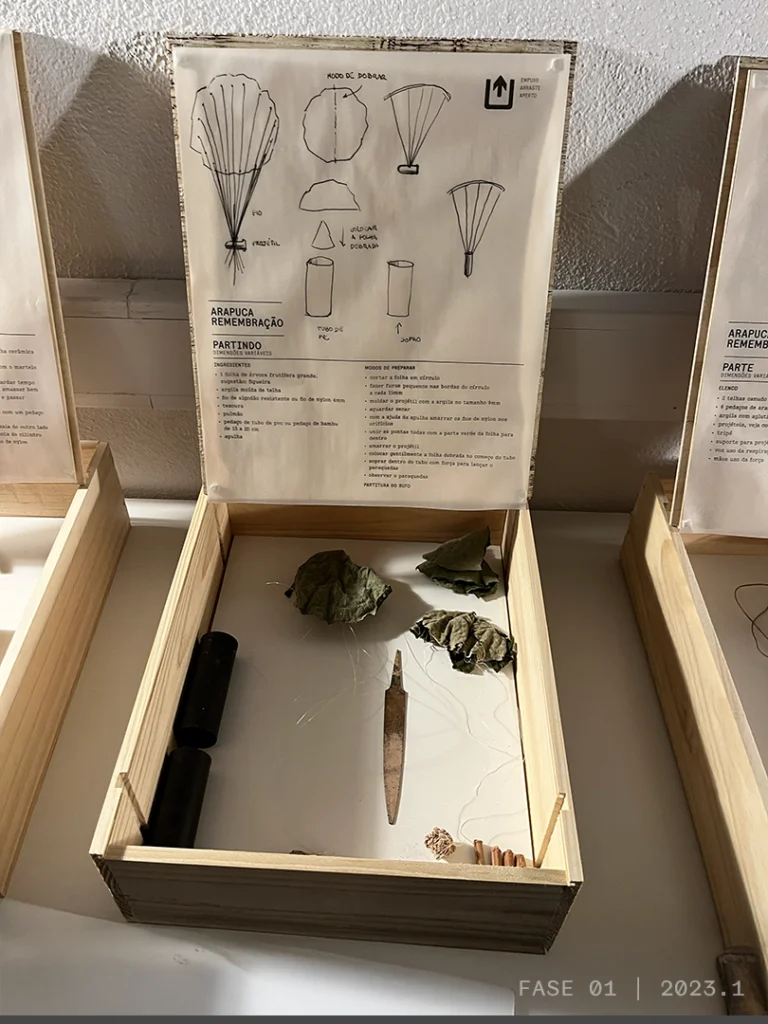
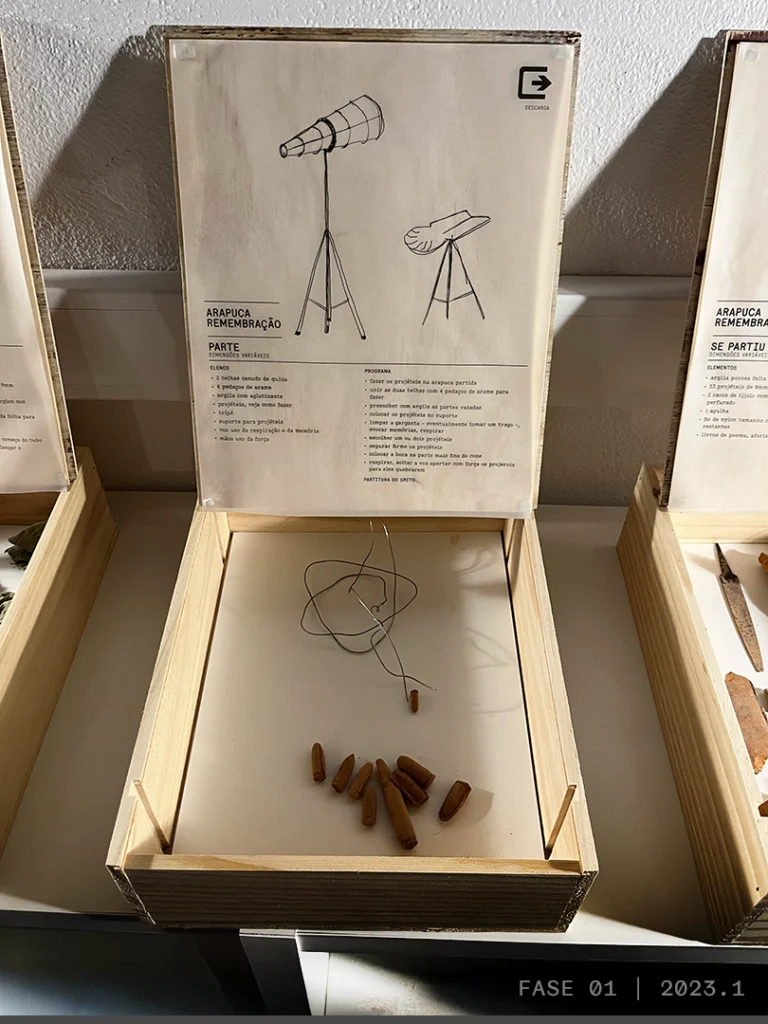
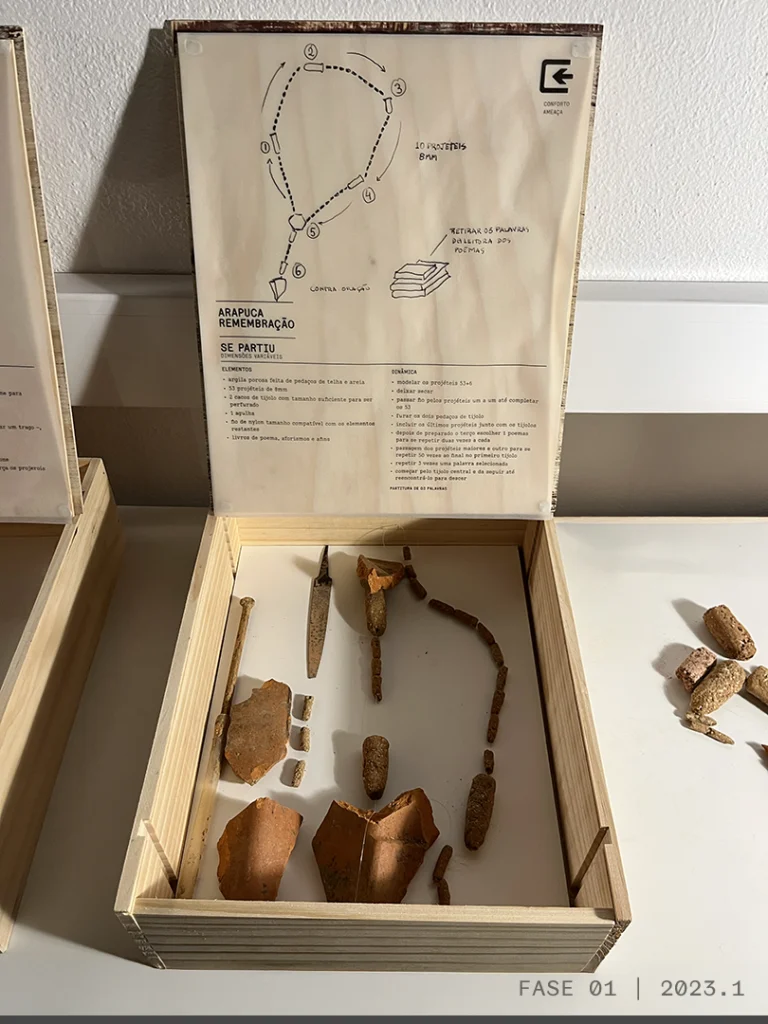
During the research and experimentation, the affect of departure emerged, embodied in four modulations and forces, four traps: | 1. DEPARTURE | if it starts from top to bottom, it shatters, gravity; | 2. DEPARTING | if it starts from bottom to top, it squeezes, creates a vacuum, thrust, drag; | 3. IF IT BROKE | if it starts from the inside out, it erupts, cracks, breaks; | 4. PARTI | if it starts from the outside in, it crushes. With these modulations, 4 traps were developed, each with its specific properties, composed of clay projectiles.
| PHASE 2 | PARTI | IT BROKE
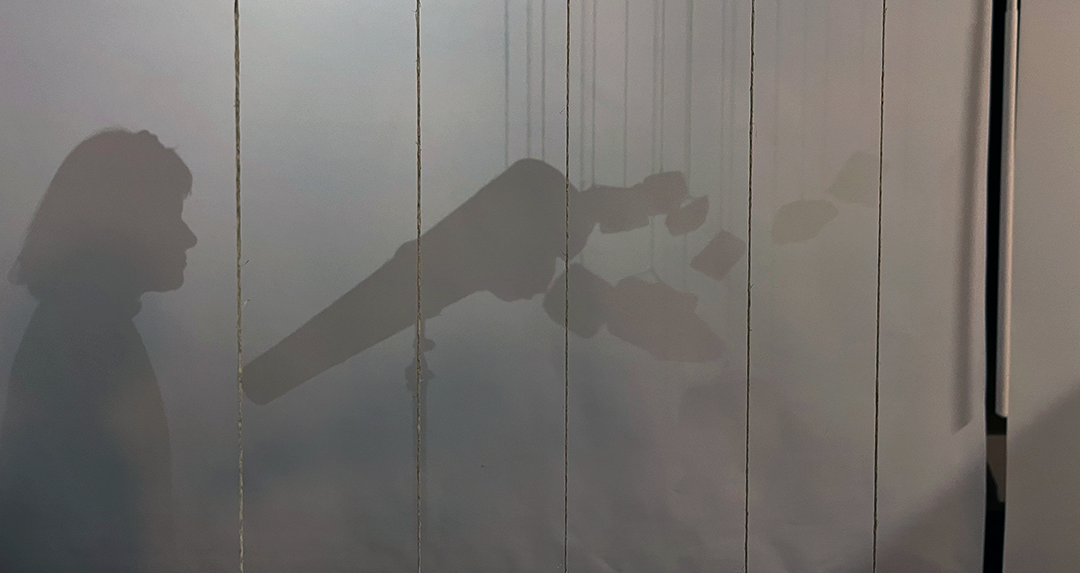
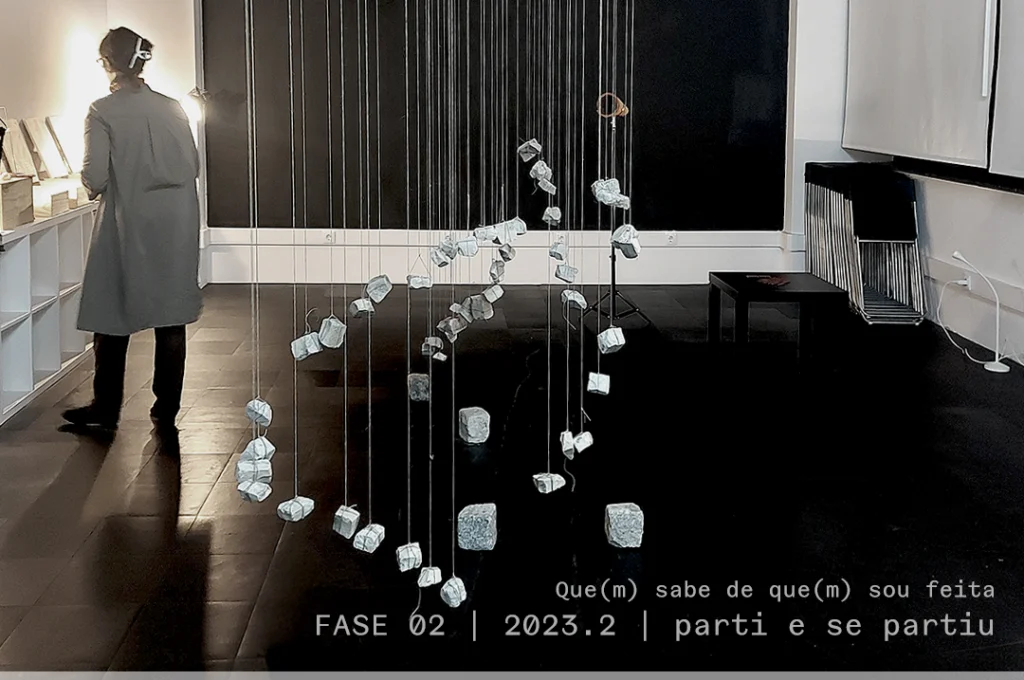
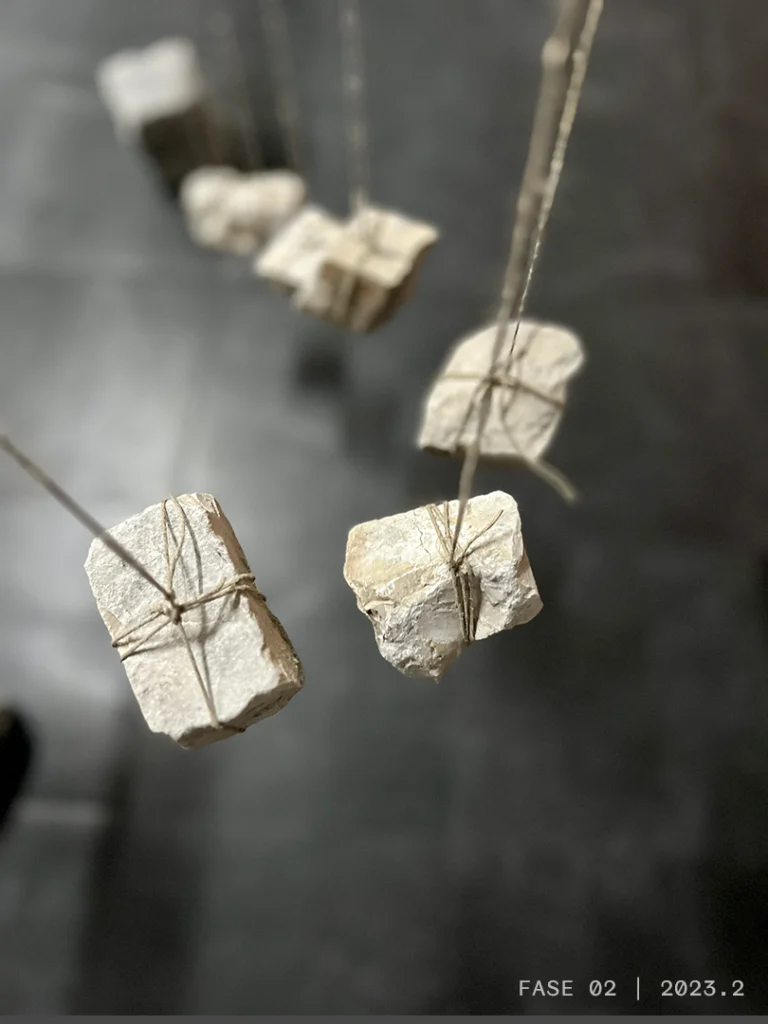
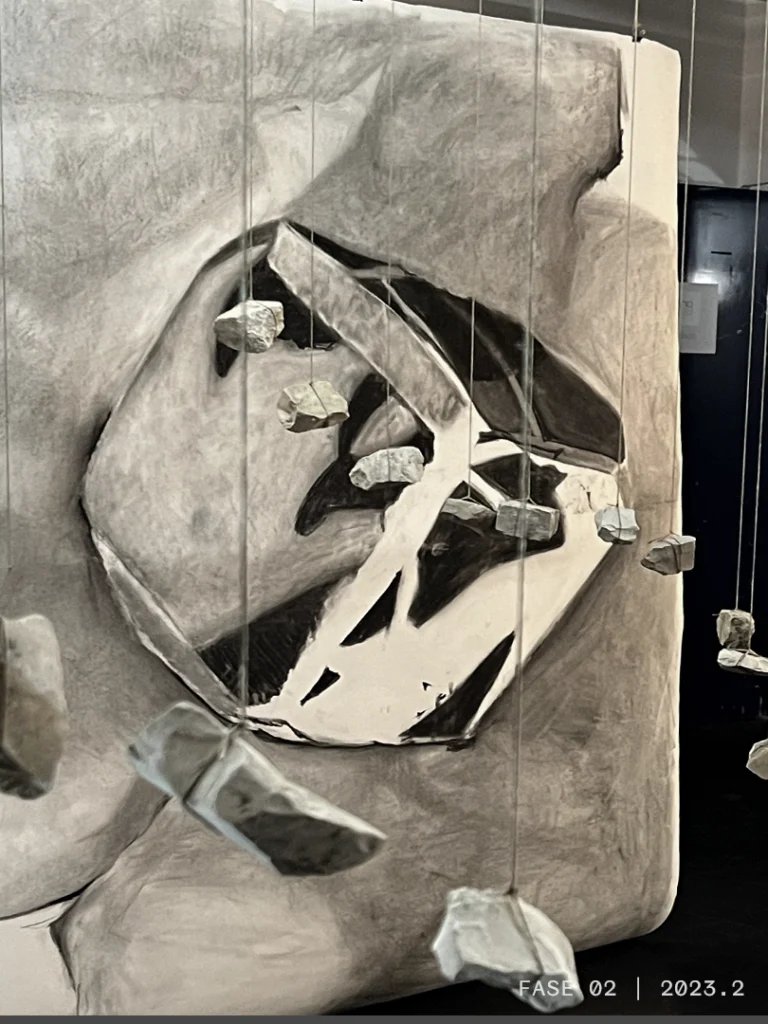
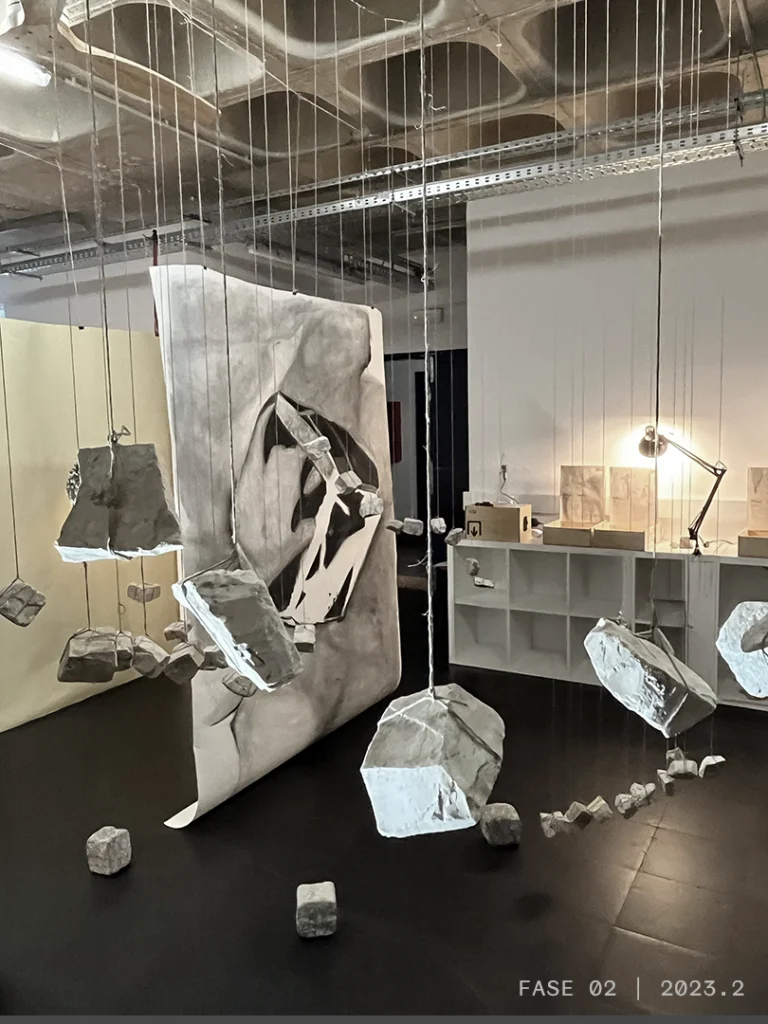
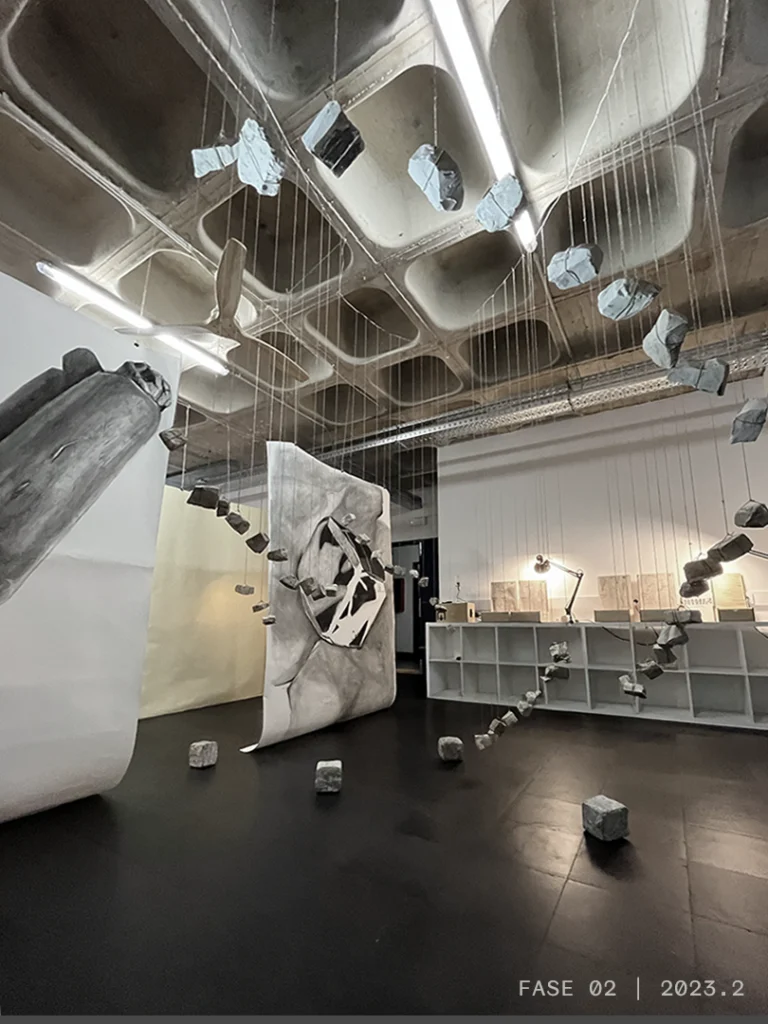
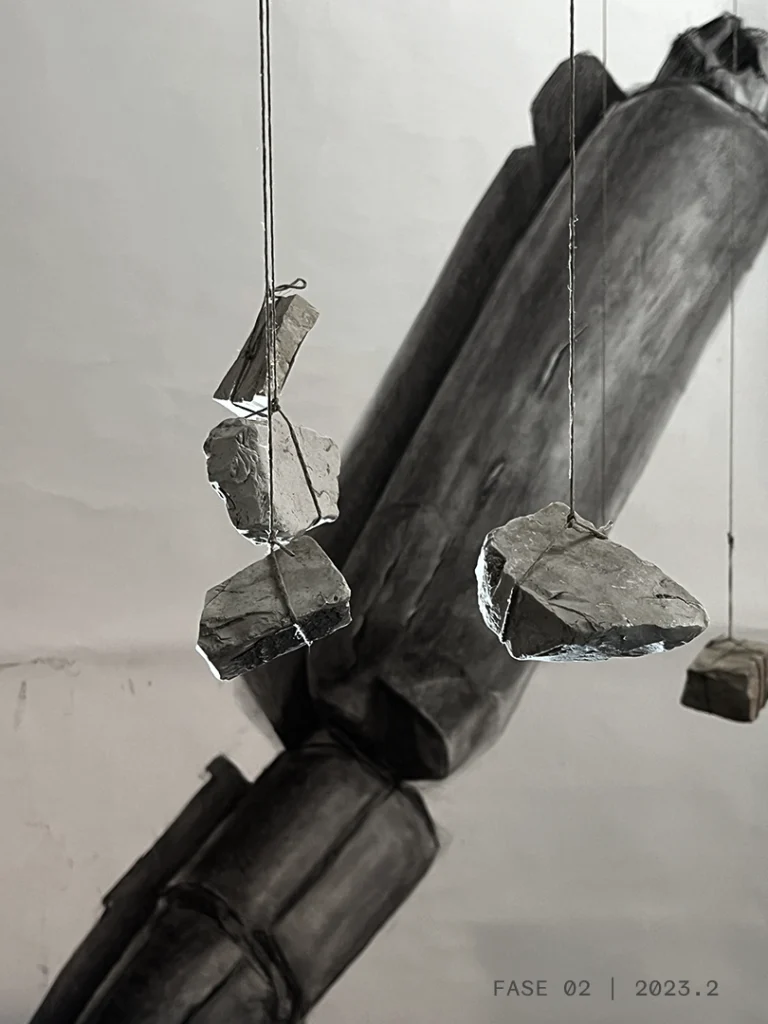
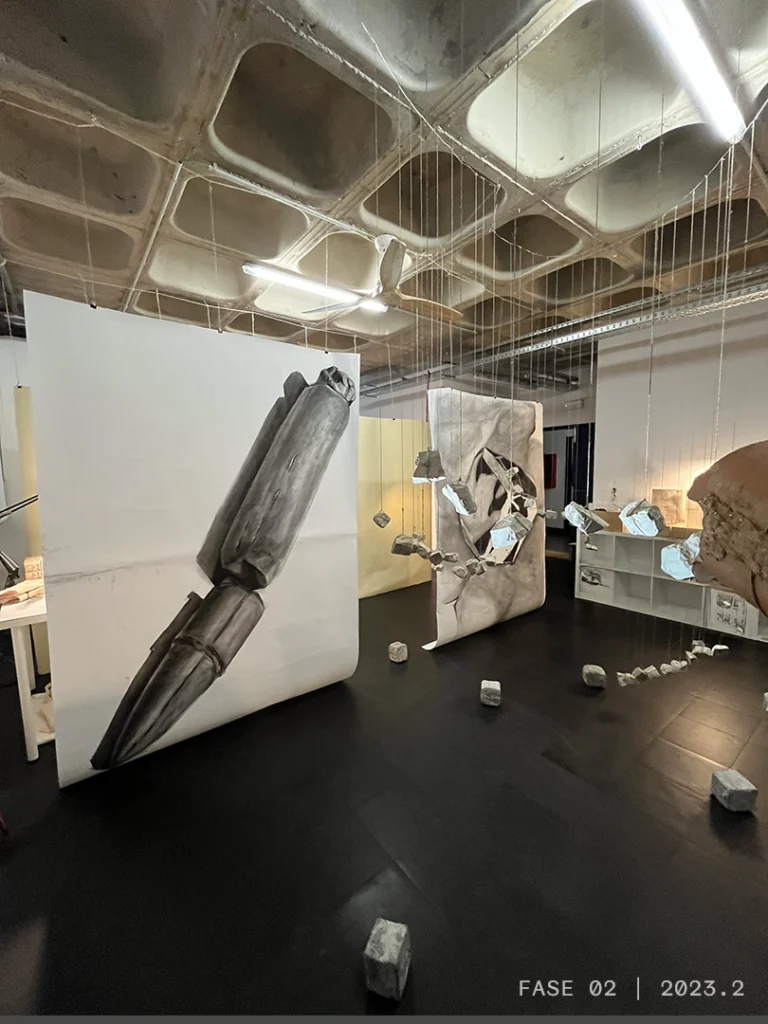
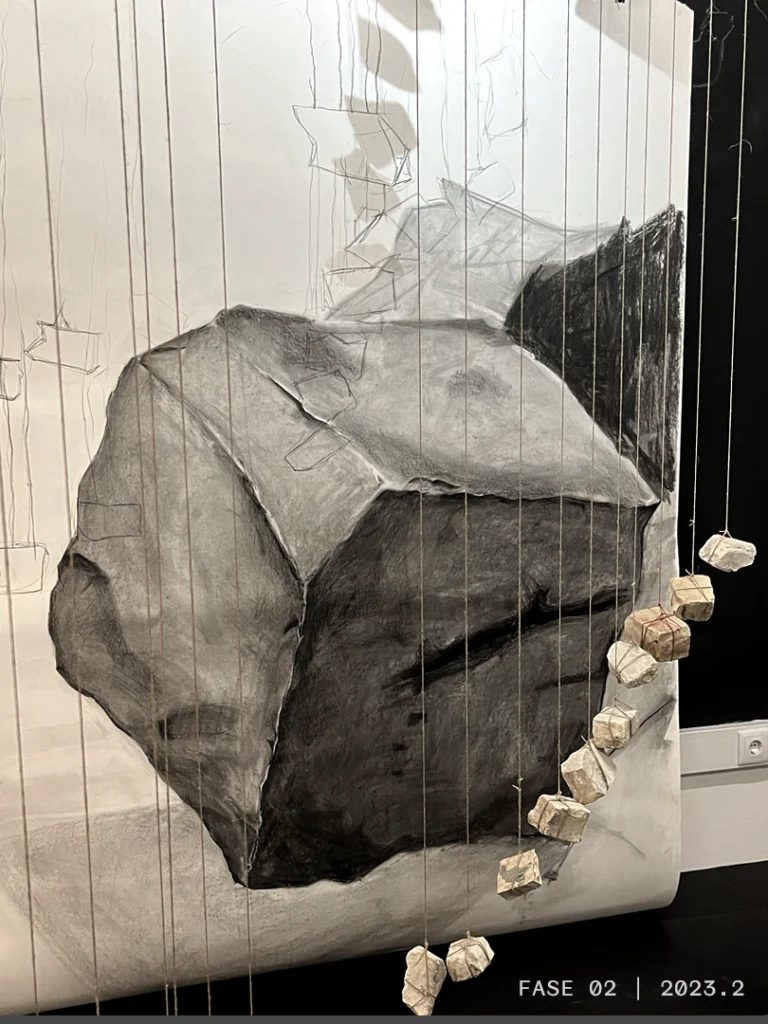
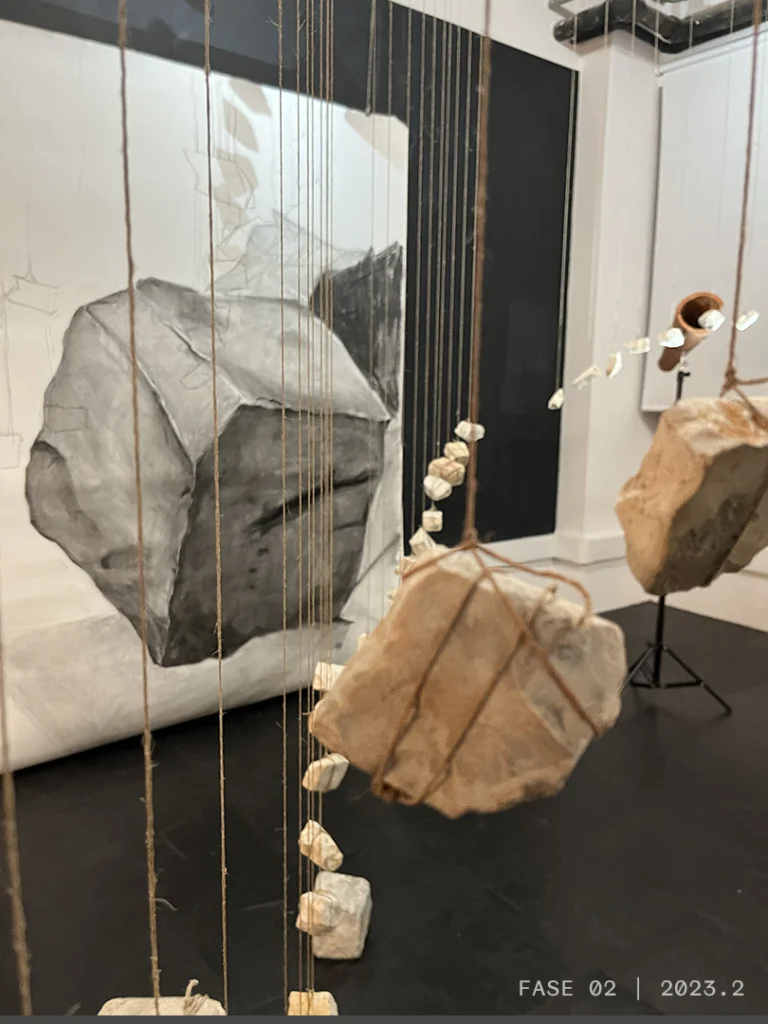
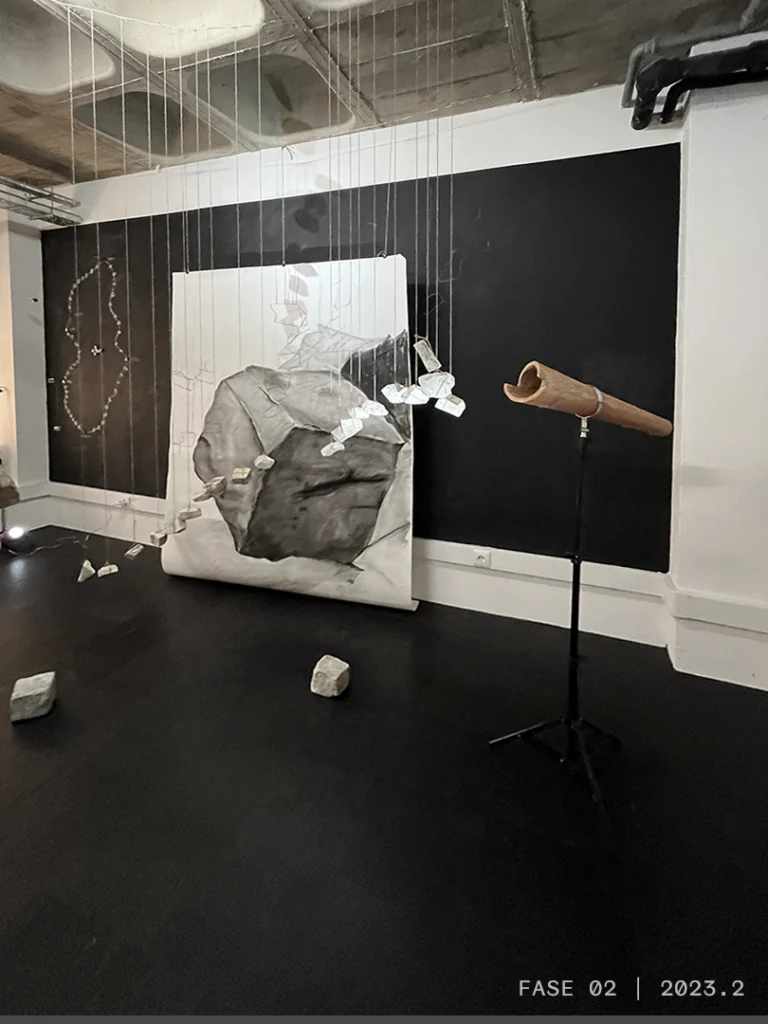
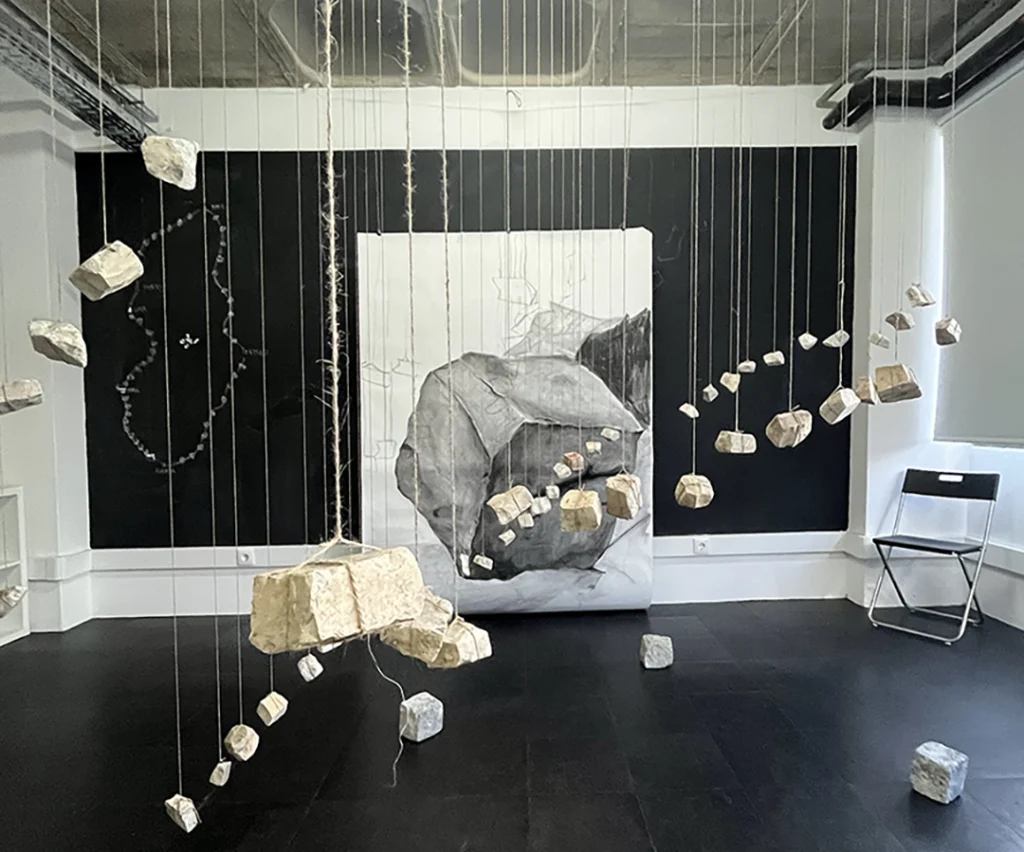
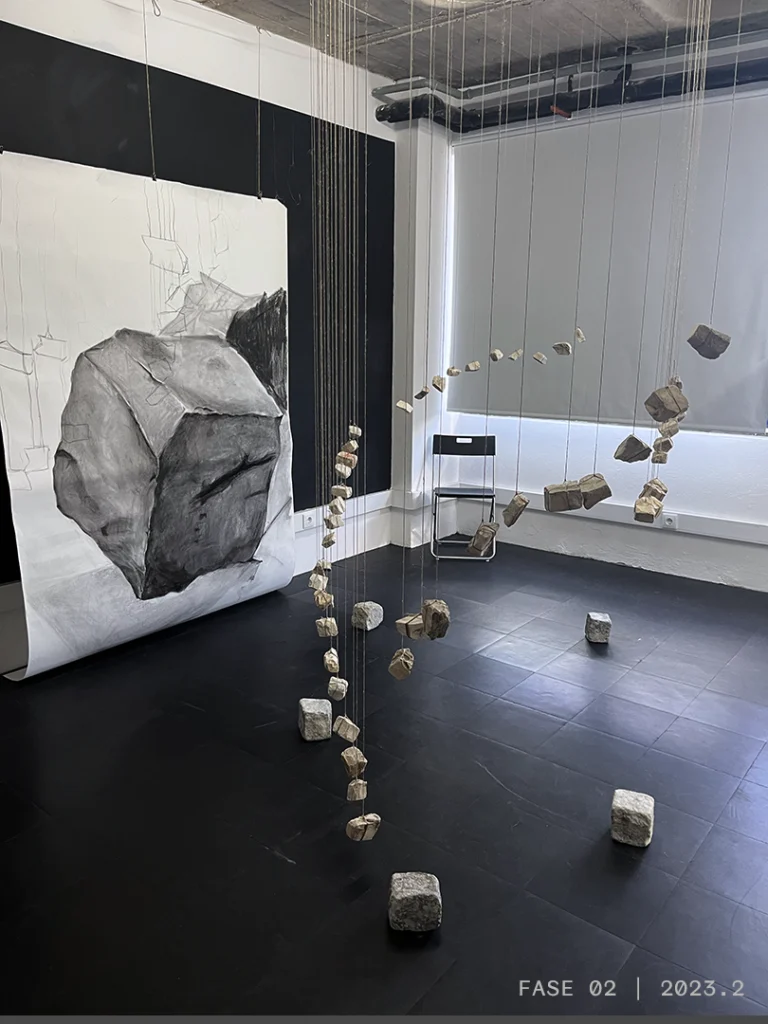
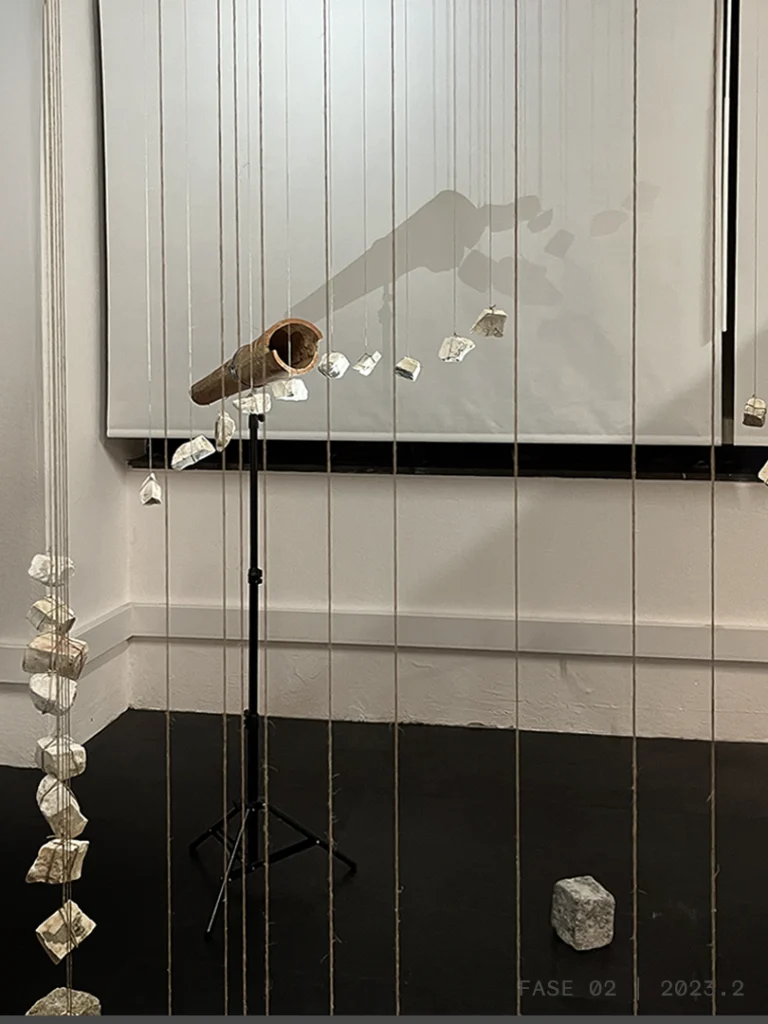
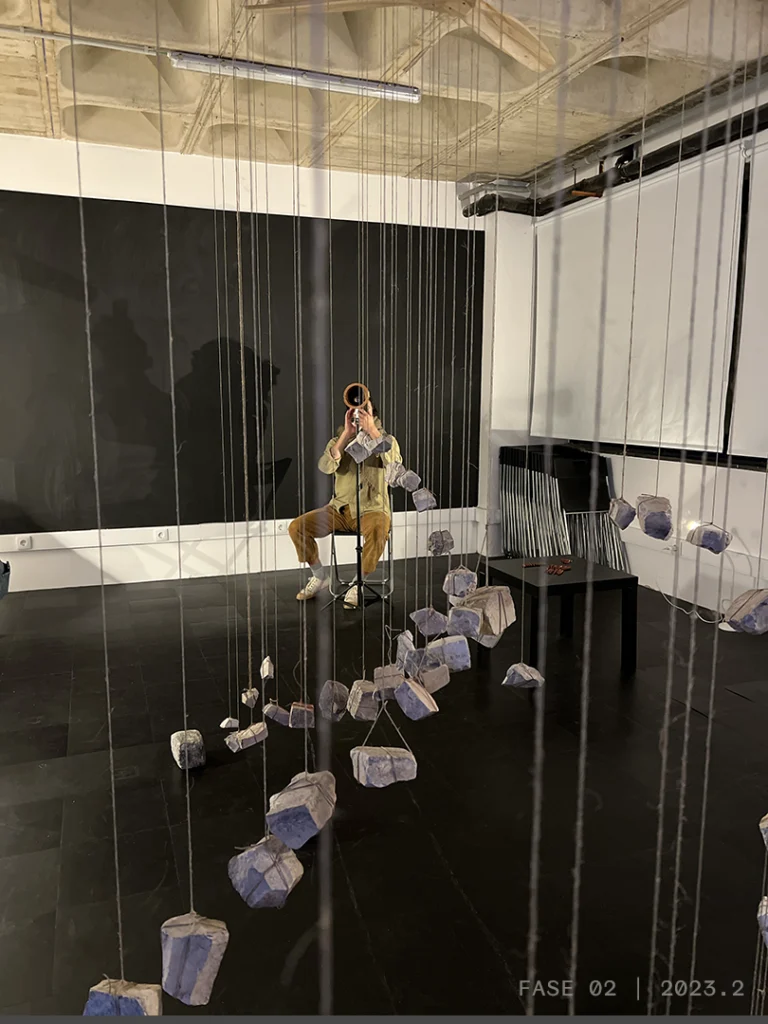
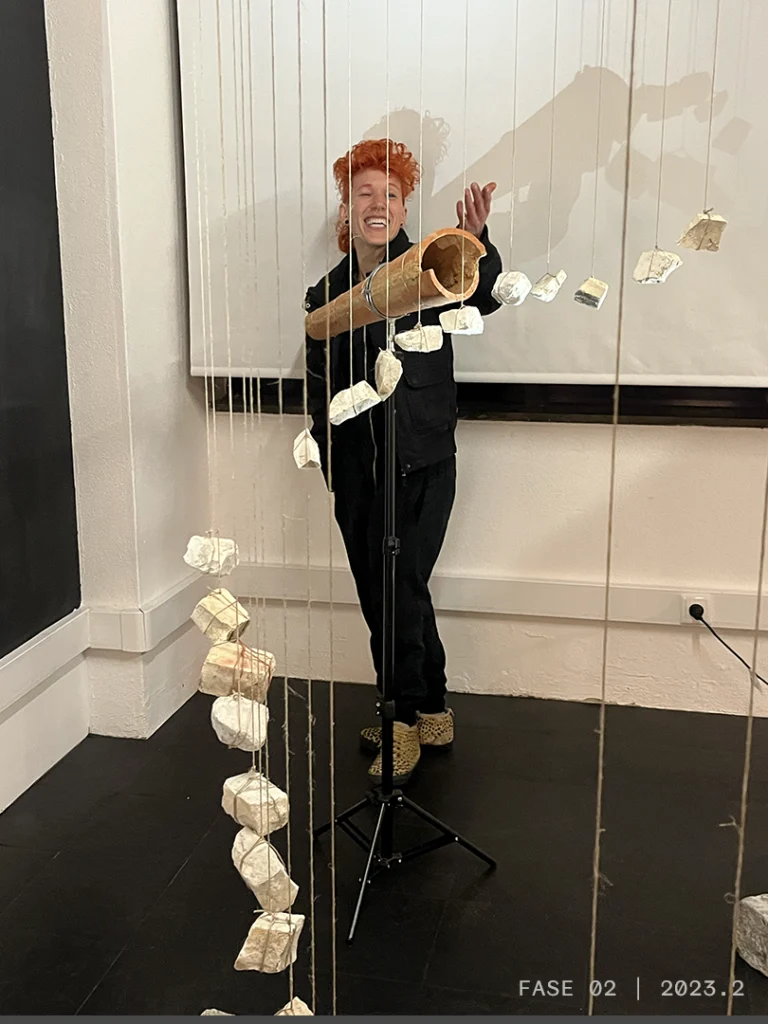
In the second phase of the project, the focus was on modulating the movement from the outside in, IT BROKE. What had been a shout, via megaphone, became an expansive gesture figured in a large drawing that accompanied spontaneous writing. The modulation of the "PARTI" movement, from the inside out, which, as a rule, promotes an internal departure, took the form of an expanded rosary. From this process, retrospectively, emerge a megaphone made of roof tiles accompanied by large drawings and the suspension of Portuguese paving stones removed from the sidewalks.
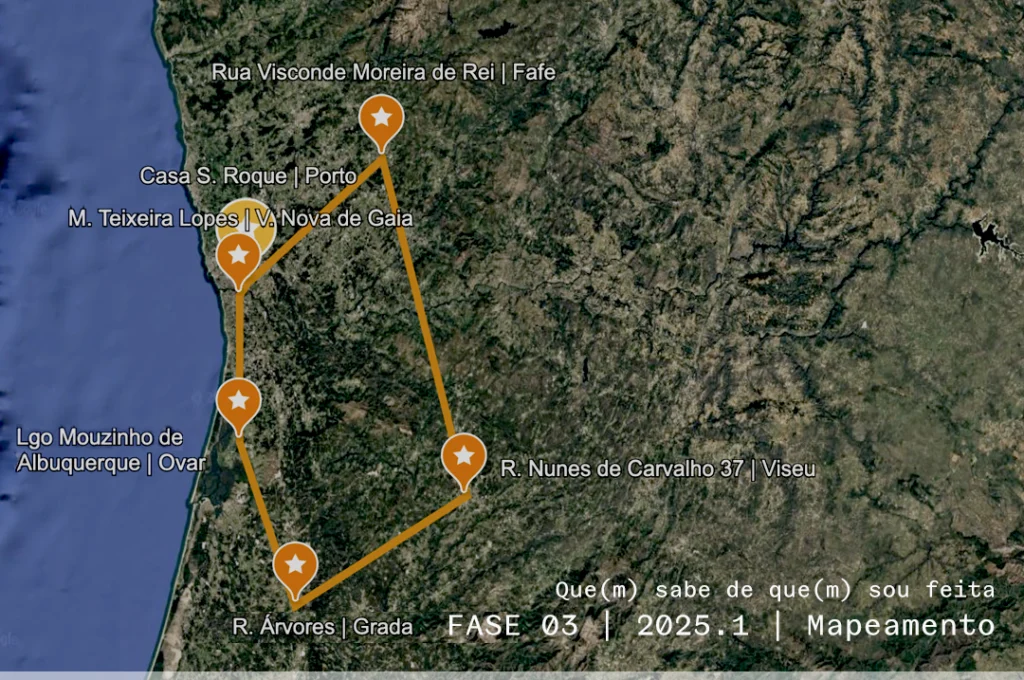
It was in the act of removing the paving stones from the sidewalks that the idea of suspending the rosary using the collected material came to the fore. At the time, the idea was to engrave something on the stones and return them to the sidewalk. Subsequently, it was understood that the rosary itself could be linked to the locations of houses that used the same roof tiles as the family home. After locating these houses and cities, the best possible configuration for a cosmic rosary was formed. This overlap revealed the spiritual nature of the journey, which came to be understood as a "journey of disillusionment," combined with a "journey of unearthing"—a pilgrimage in search of healing bonds and reconfiguring family destiny. Two journeys combined into one.